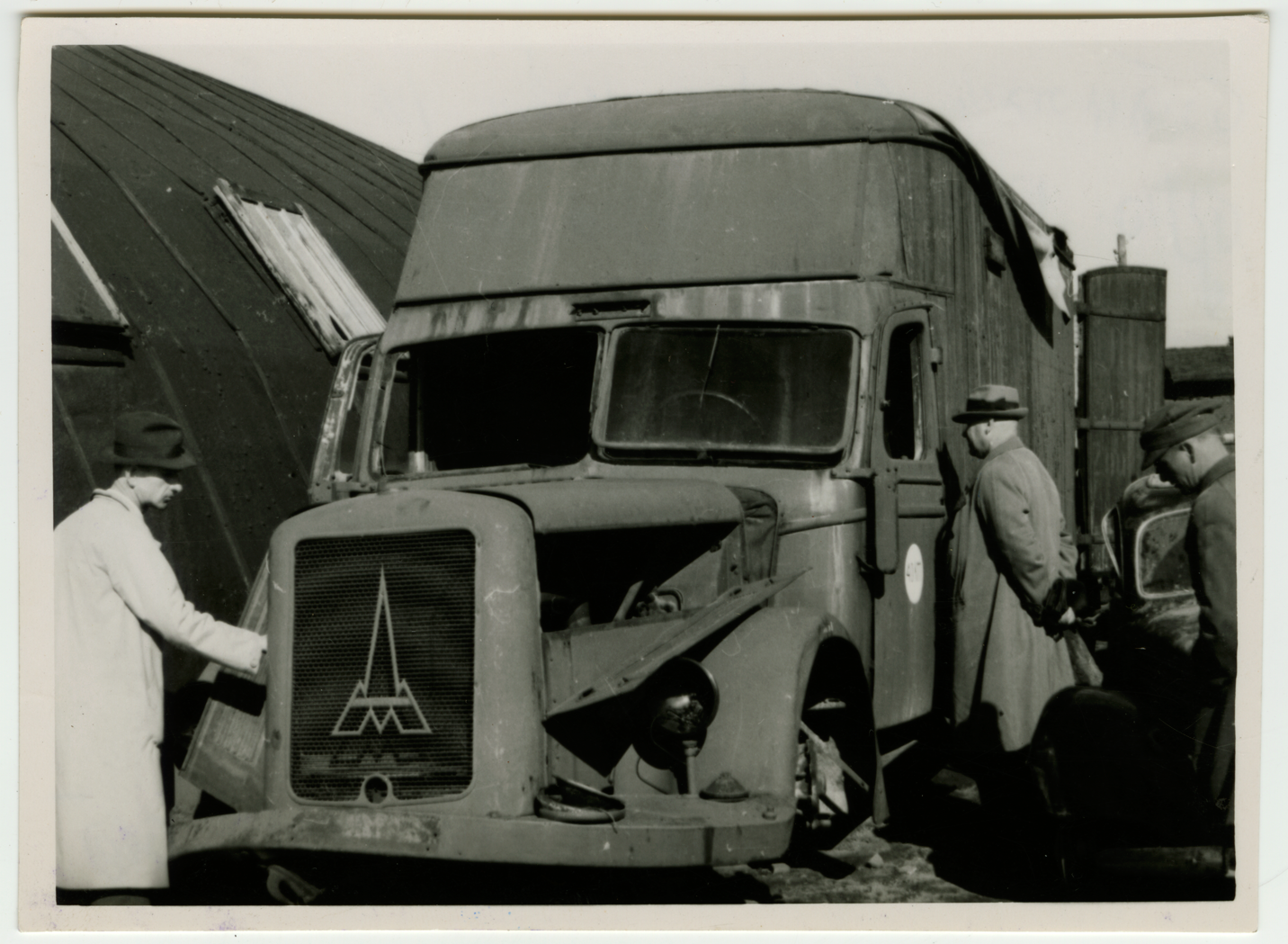
Jacob Flaws, in a
mAsS cOnSpIrAcY with the University of Nebraska Press to write, edit, and a publish a book offered for sale to the public.
First nosewitness
here.
Second nosewitness
here.
Flaws's third nosewitness about the smell of Treblinka is Jakub Krzepicki, who is usually mistakenly referred to as Abraham Krzepicki.
Abraham [sic] Krzepicki observed, "The monstrous stench of the decaying bodies was literally... nauseating." [endnote 15]
[ellipsis in original]
- Flaws, Jacob. Spaces of Treblinka: Retracing a Death Camp. University of Nebraska Press, 2024, p. 133.
endnote 15: ARG II 382 (Ring. II/299), p. 164.
Flaws quotes an archival document directly which is made up of 3 notebooks of handwritten Yiddish by Rachel Auerbach. He has worked out to his satisfaction how to read Yiddish handwriting without citing a translation into any other language.
For translations, much of the second and third notebooks are in Donat's book on Treblinka, and the entirety of all three are in Volume 5 of The Ringelblum Archive in English.
However, nothing like what Flaws writes is in those books, showing his methodology is appalling and can not be defended. He relies on logical fallacies like the argument to gullibility of plagiarized schlock.
Page 164, translated into English:
the captain and brought his club down on the heads nearest him. Damned people, indeed, pushed down in the caverns of hell, and this was one of the devils, a minion of hell with red cheeks and a black moustache. This SS-man had no horns, he merely used fire and brimstone, heat and steam...
"Away! Away! Let me out of here before I go crazy! I'm getting into a state where I'd be ready to jump into the death cauldron on my own!" I thought. I tried to calm my nerves and to allow myself not to become so upset. Just one more time in my life I wanted to see people with calm faces, with other things to do than running beneath the whip in a death chase. Herds of human beings like herds of oxen, herds of sheep, driven to the slaughter, with the only difference that oxen and sheep don't know what will happen to them until the last minute, while in the case of humans even the youngest children understand the situation sooner and can see and understand what's coming.
Flaws has worked out to his satisfaction that he can fabricate quotes and then cite archival documents directly. He believes his own made-up quote is
tested, verified, and regarded as generally reliable.
This willingness to believe his own inanities is known as the argument from plagiarized schlock. Thus, he can console himself by affirming his credulity in his pretend quotes.
AI Overview:
The fallacy of argument from gullibility to plagiarized schlock occurs when someone argues a claim is true simply because it's comforting to believe. In essence, it is the opposite of critical thinking and logic. "I believe this is true so it must me." It shifts the burden of proof from "the real world" which is for "the goyim" to the realm of fanatical belief in religious terms which lack analytical value.
Flaws, gullible to his own lies and schlock, doesn't provide a secondary reference, which might not help anyway. The previous secondary reference he provided was page numbers for a book in which the relevant person isn't mentioned at all.
Just because he finds his incorrect quotes and citations easy to accept does not therefore mean they are credible.
He has worked out to his satisfaction how citing random books with random page numbers is the methodology used by historians all over the world. In reality, it is the methodology used by Jeffrey Epstein and his human trafficking legal consultants at the US Holocaust Memorial Museum.
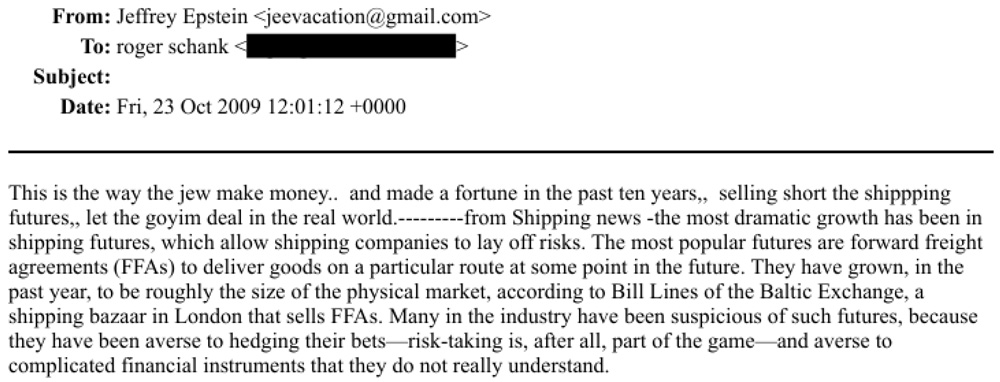
This is the way the jew make money.. and made a fortune in the past ten years„ selling short the shippping futures„
let the goyim deal in the real world.
-
PDF Source
This methodology allows for Flaws to "let the goyim deal in the real world" while he makes up quotes, assigns page numbers to them, and puts them in a book that he charges money for.
AI overview:
An argument from gullibility is a logical fallacy that assumes something is true because it's comforting to believe, imagine, or understand.
So saying "ARG II 382 (Ring. II/299), p. 164" is obfuscation
pure and simple. The academic term for this is
midwit, which some others term
hate speech.
With no particular translator listed, he implies that he is able to read Auerbach's Yiddish handwriting himself. If so, he has
easily duped himself and buyers of his book.
inb4
No, the quote is not on page 163 or 165.
No, the quote is not on page 146 (not a transposition error).
No, the quote doesn't show up anywhere in the Ringelblum Archive translation.
No, the quote doesn't show up in Donat's translation.
No, the quote doesn't show up in Google. Or Archive.org. Or Z-library.
Maybe, like historians and people interested in methodology, he
does not know what an accurate citation is.
Disclaimer: the point of this thread is to highlight mistakes/misconceptions of mainstream works with the same lack of charity, hyperbolic insults, and non sequitor mischaracterizations as directed at revisionist writings. The citations are real, the tone is satirical. If it looks unhinged, insane, and paranoid -- that's because it is. Some people have denounced such argumentation style as being not a win.