https://www.eisenhowerlibrary.gov/sites ... -06-18.pdf
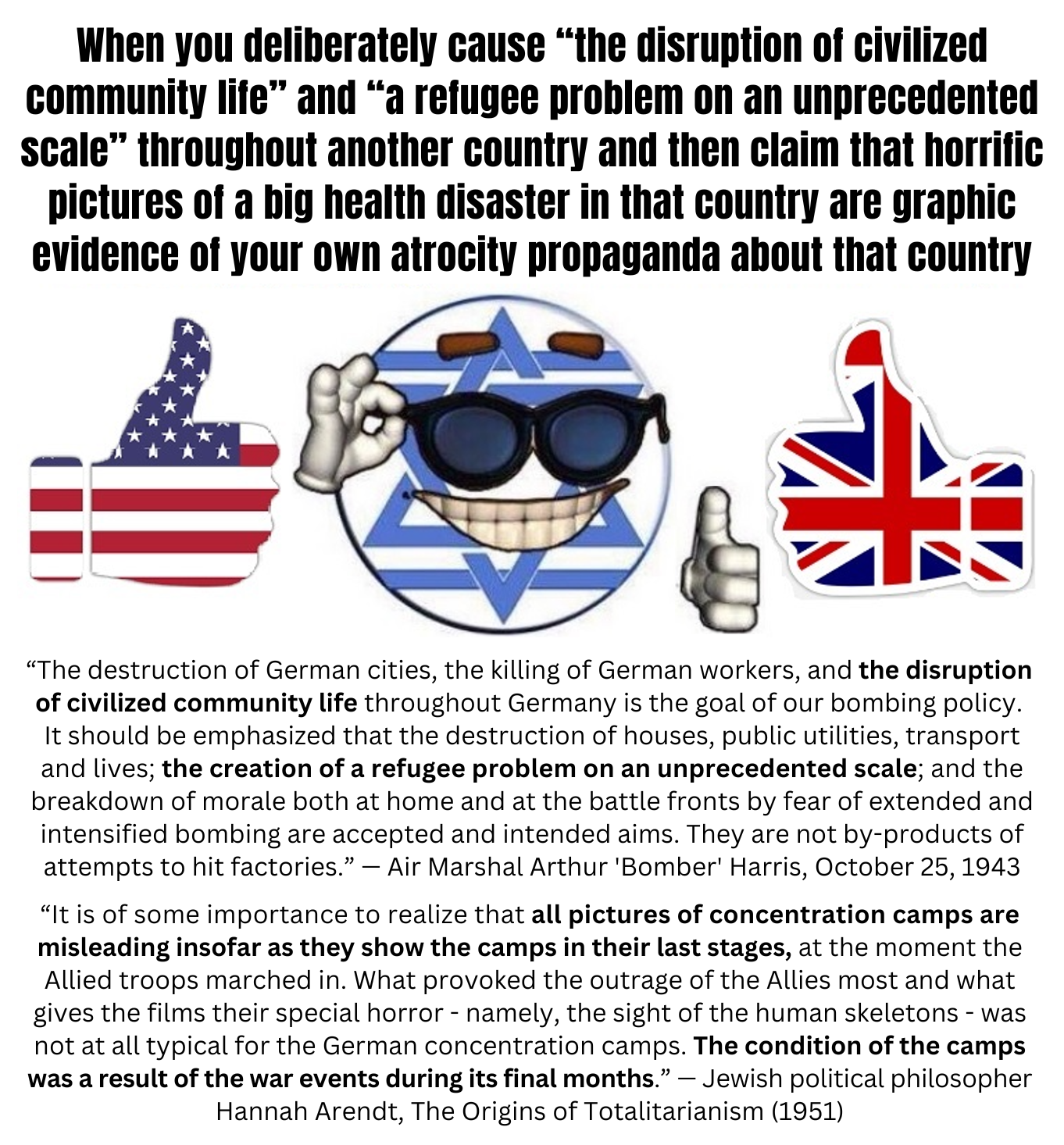
In describing Germany's ongoing desperation for food, Eisenhower made an explicit comparison between his own occupation with that of the Nazi regime. In so doing he admitted that deaths at Buchenwald were chiefly a problem of lack of food, not weird atrocity tales.Another thing in which you might be interested is this current German problem. It is very, very tough. Germany is destroyed way beyond any other thing I have seen in this war. When we first went to London and saw the gaping spaces around St. Paul's Cathedral we wondered how they took it. Frankfurt, Cologne, Kassel, Berlin are London at its worst multiplied by 100,000. They are destroyed!
In the dislocation of her transport system, breaking up of their agricultural system, mining--mining is almost ceased--they are facing a problem of starvation; I mean real starvation.
That is the first and the emergency problem in Germany. What are we going to do just to prevent on our own part having a Buchenwald of our own, not in this case from intent, but because we wouldn't be able to help it? We have to do something and the second and long-range problem goes into a field above mine. That belongs to the heads of States and long-range policies. I am the executor and not a policy-maker.
He claimed that Germany had intent to starve its prisoners even as he denied that he or the U.S. intended to starve anyone. In actual fact, Eisenhower was largely responsible for both by blockading Germany's imports and by destroying its industry and transportation. He personally had intent.
Ironically, Buchenwald was to become a NKVD camp after this conference, and then it had an even higher mortality rate.
Later, in response to a press question, but not worth quoting, Eisenhower acknowledged that American food deliveries had been important to the war effort in Western Europe.
To another question, Eisenhower acknowledged that his own efforts were responsible in part for starvation in the camps.
Eisenhower also made some choice comments about "atrocity stories".PRESS: To what extent, General, were the American prisoners deliberately starved? Was that a general practice or isolated?
GENERAL EISENHOWER: There is unquestionably plenty of evidence that the conditions in some prisoner of war camps were deplorable. Again, they can at least make an excuse, which is that their transportation system had been so badly destroyed that they were getting in such desperate straits themselves that it may have been impossible for them to do more, and that was when we notified them they were to leave our prisoners where they were when we came up and let them alone, and in return for that we would send that prisoner out of the theater of operations. And up until unconditional surrender came about, we faithfully observed that. We would not use them again in the combat zone. There was plenty of evidence of most deplorable conditions and some of them pure neglect.
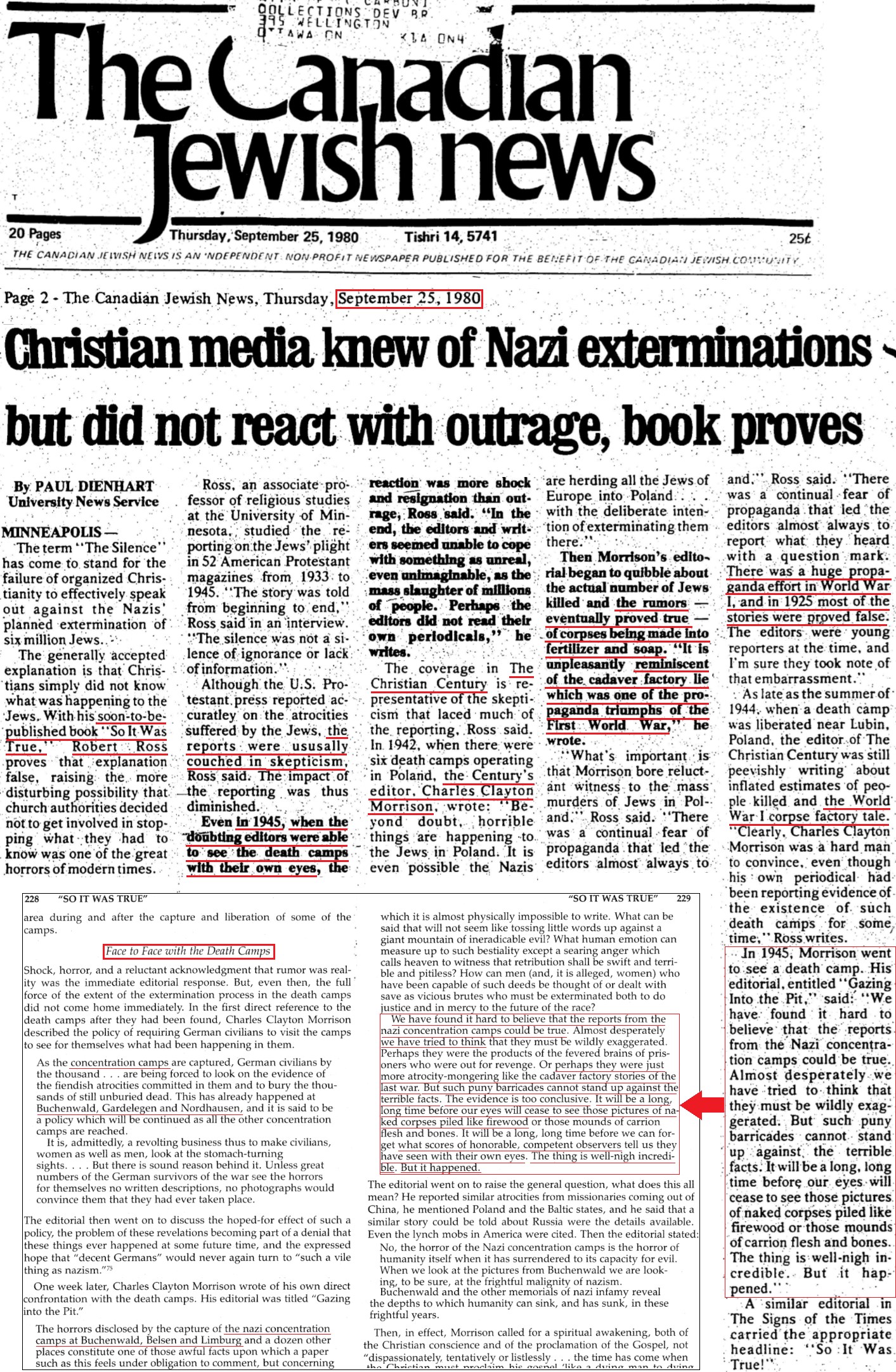
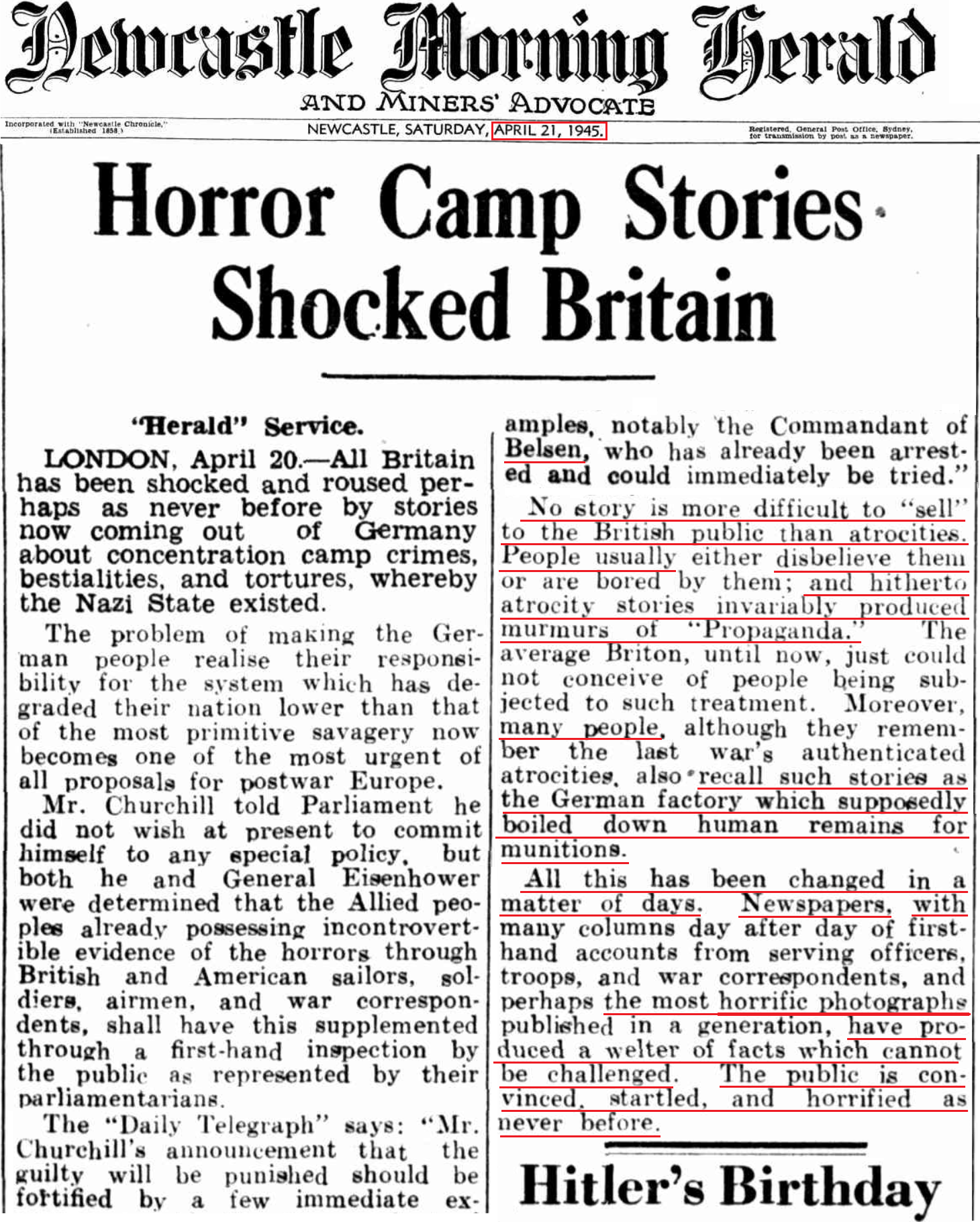
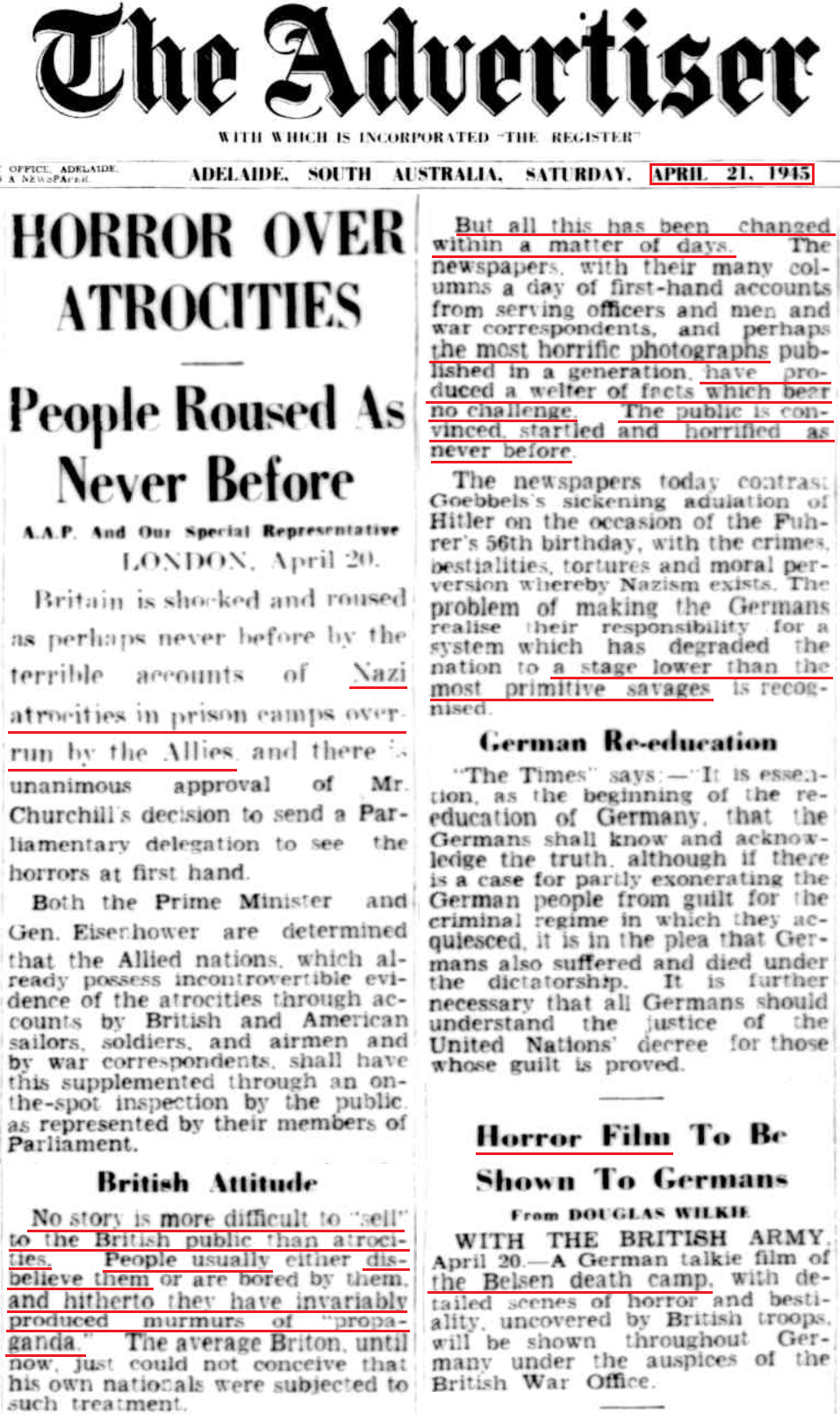
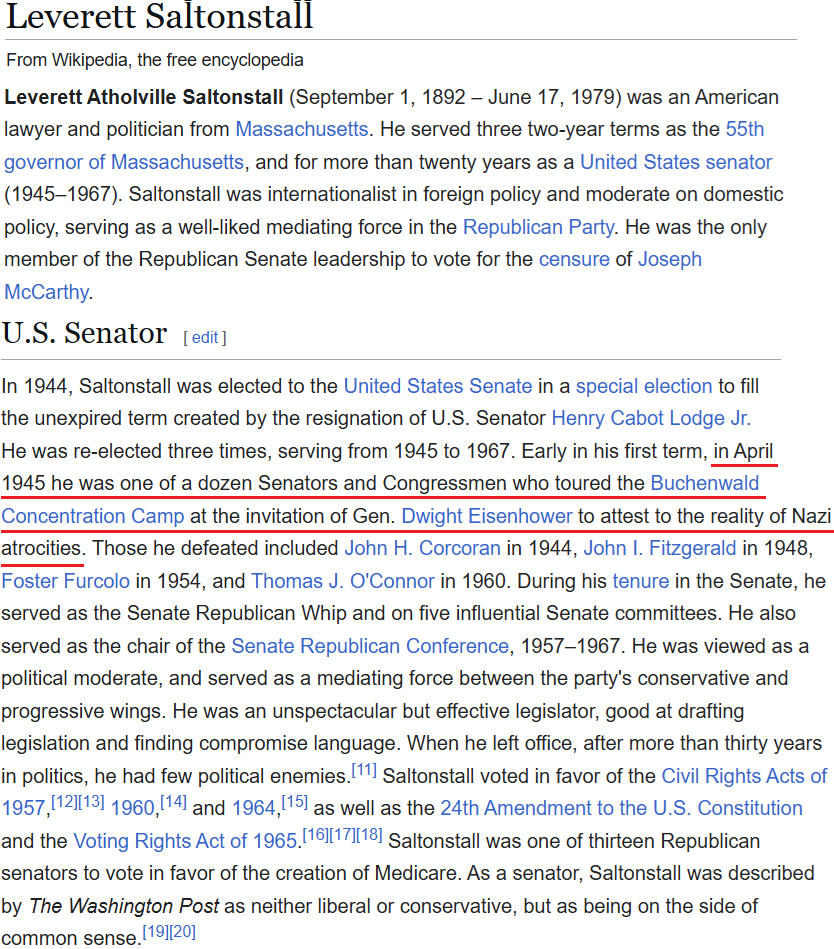
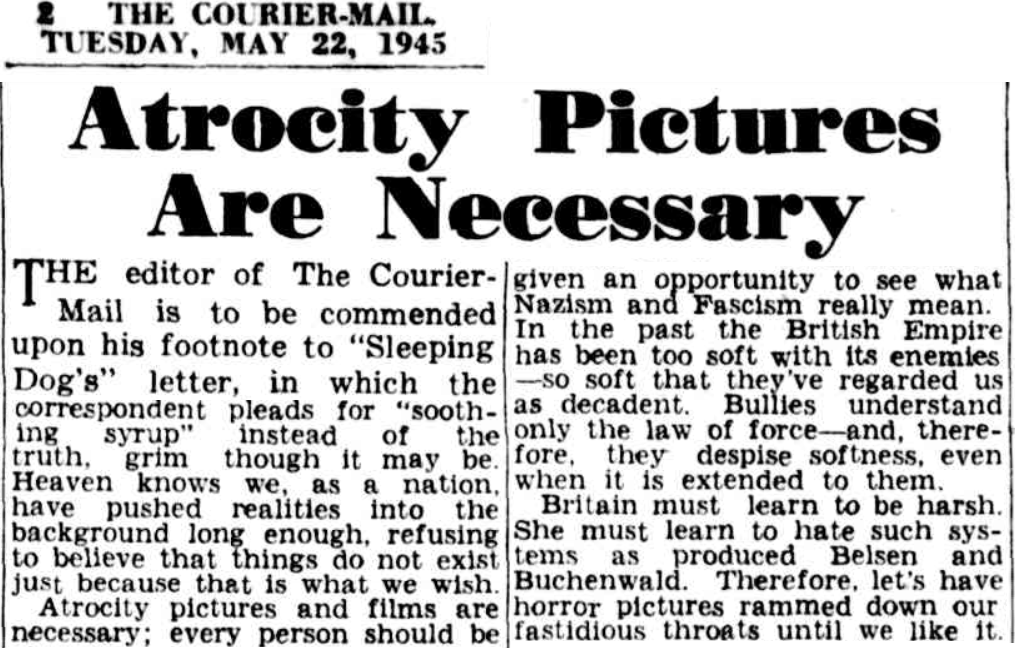
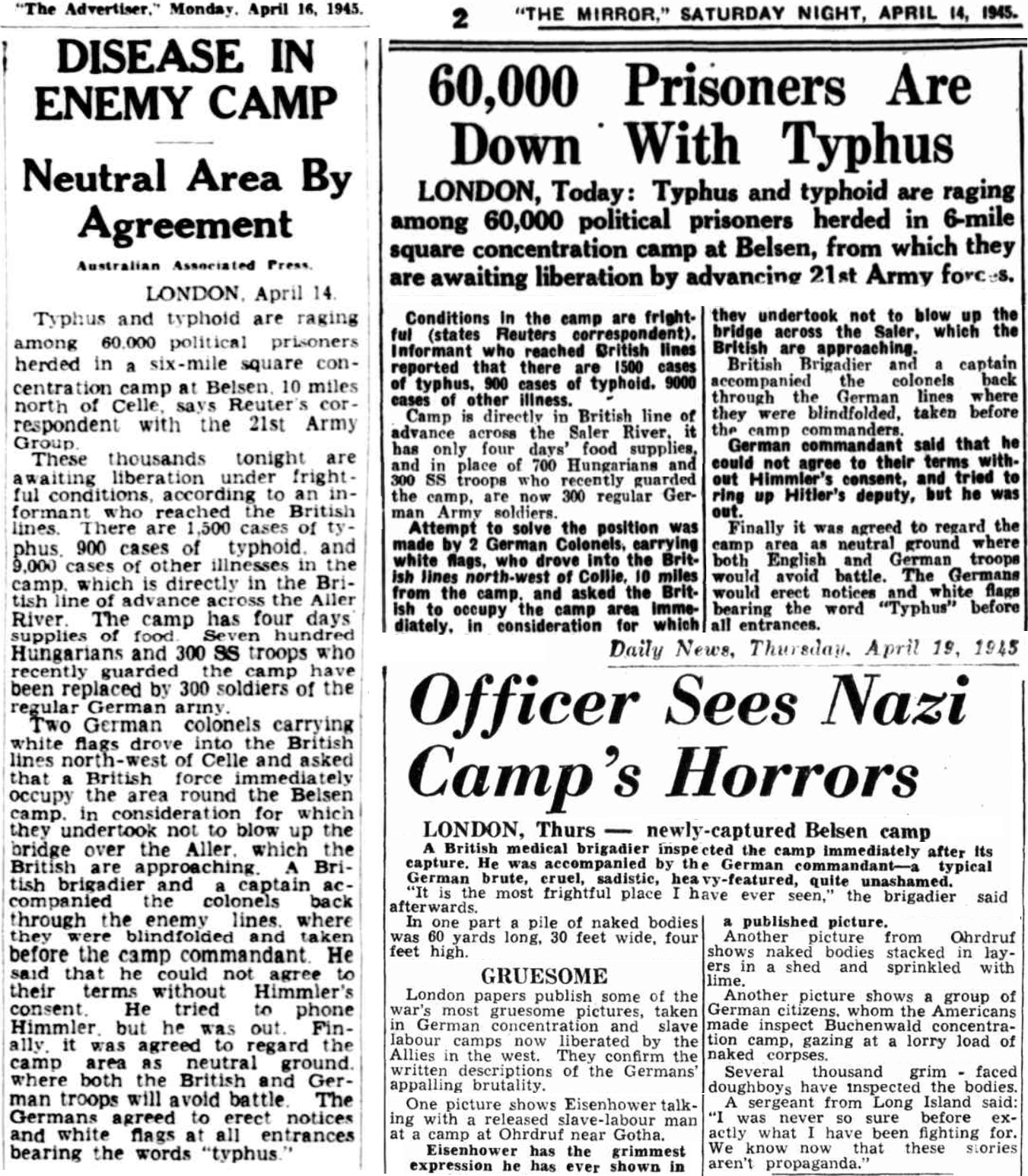
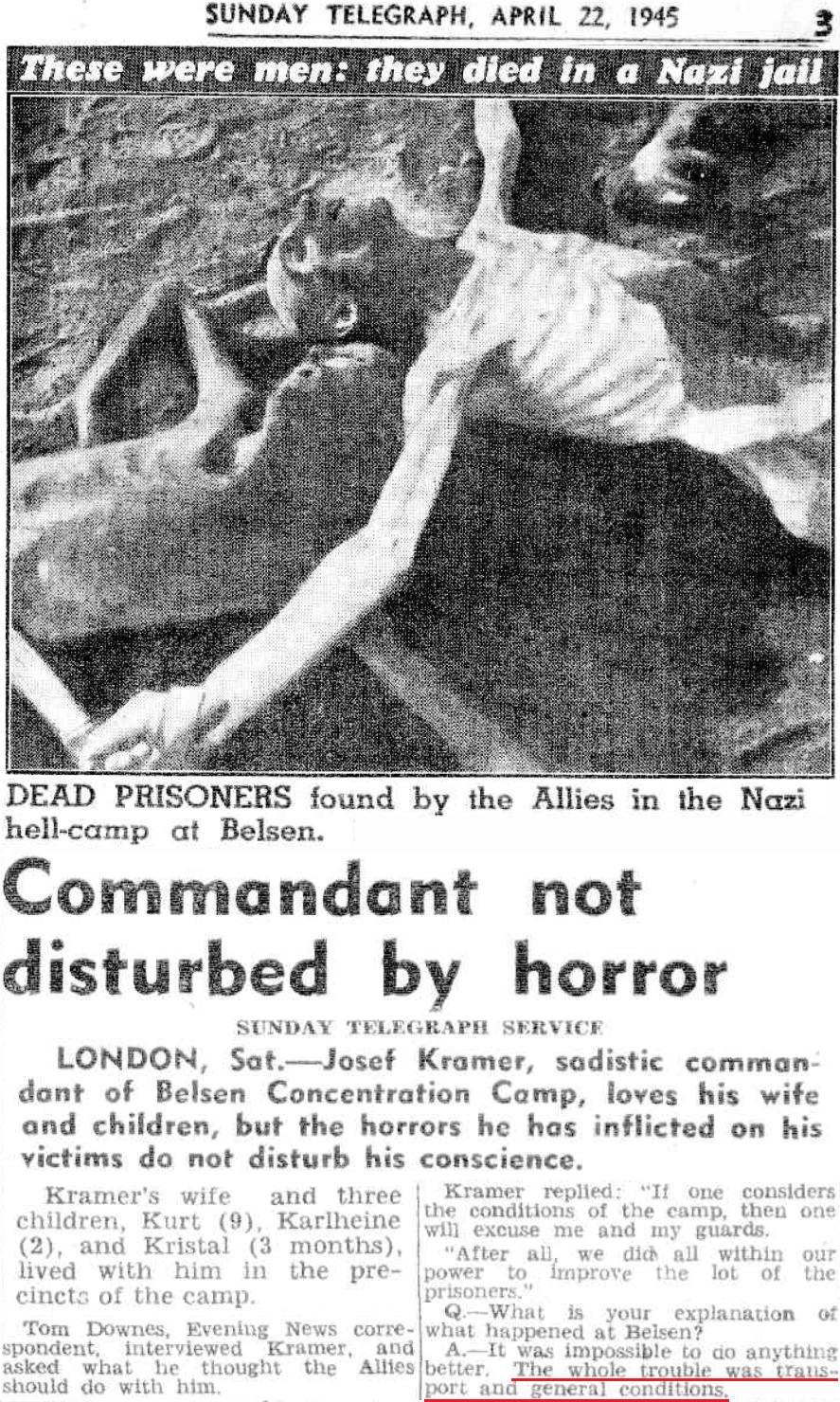
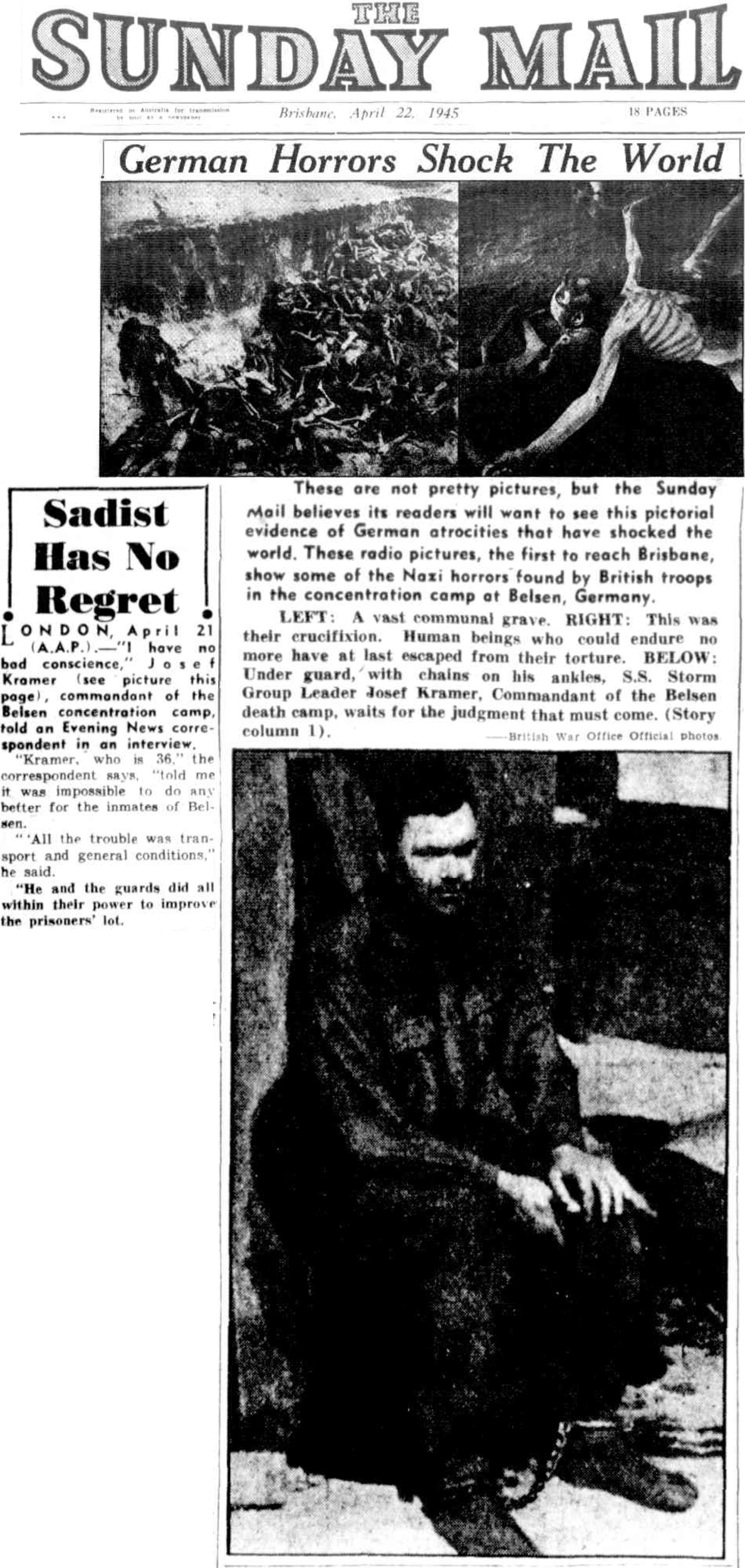
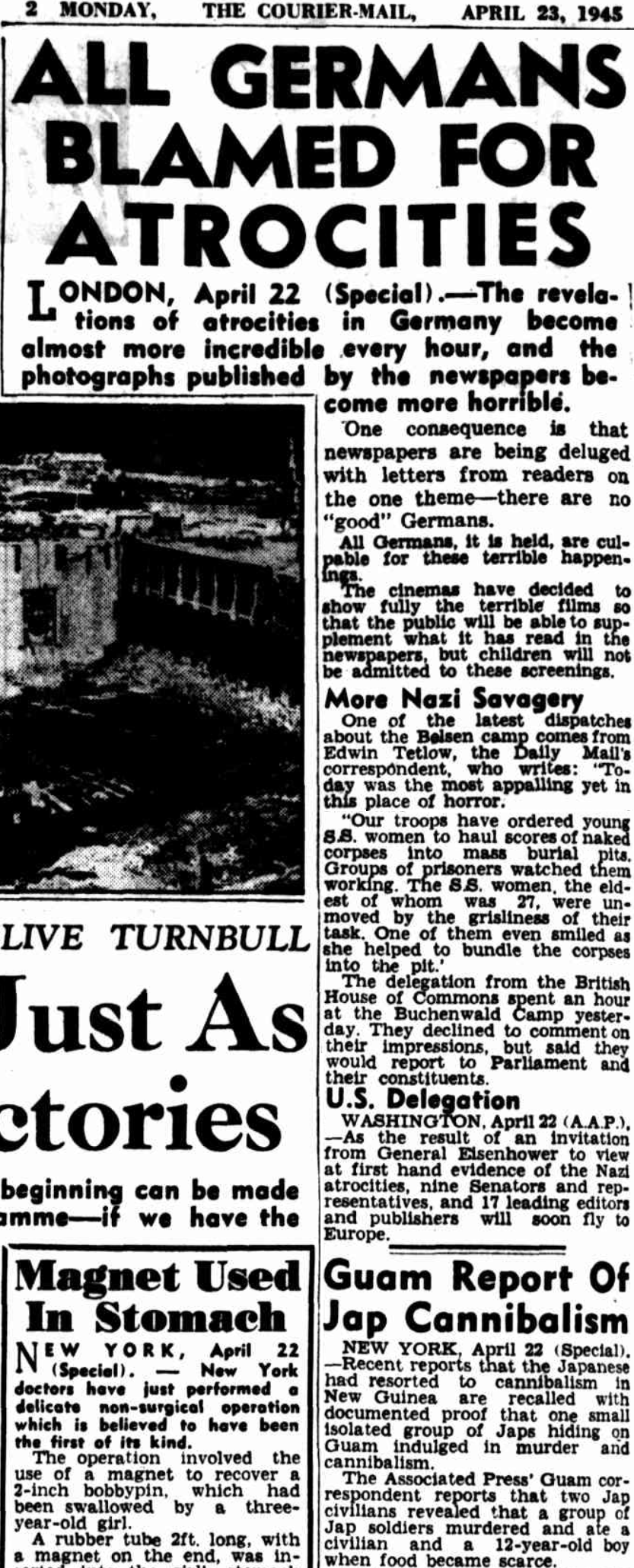
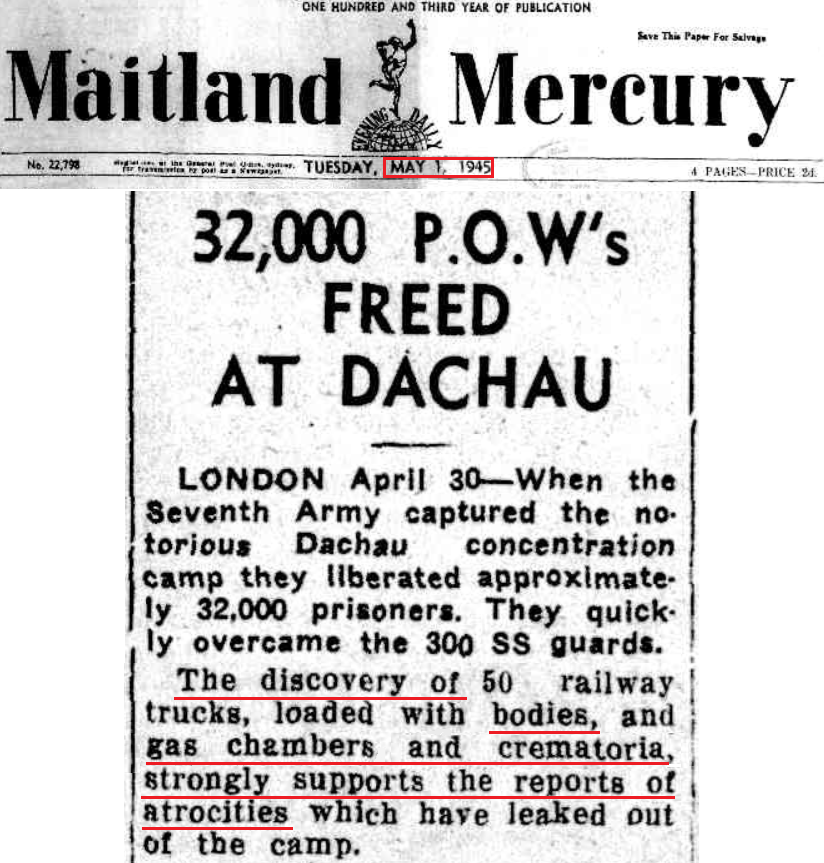
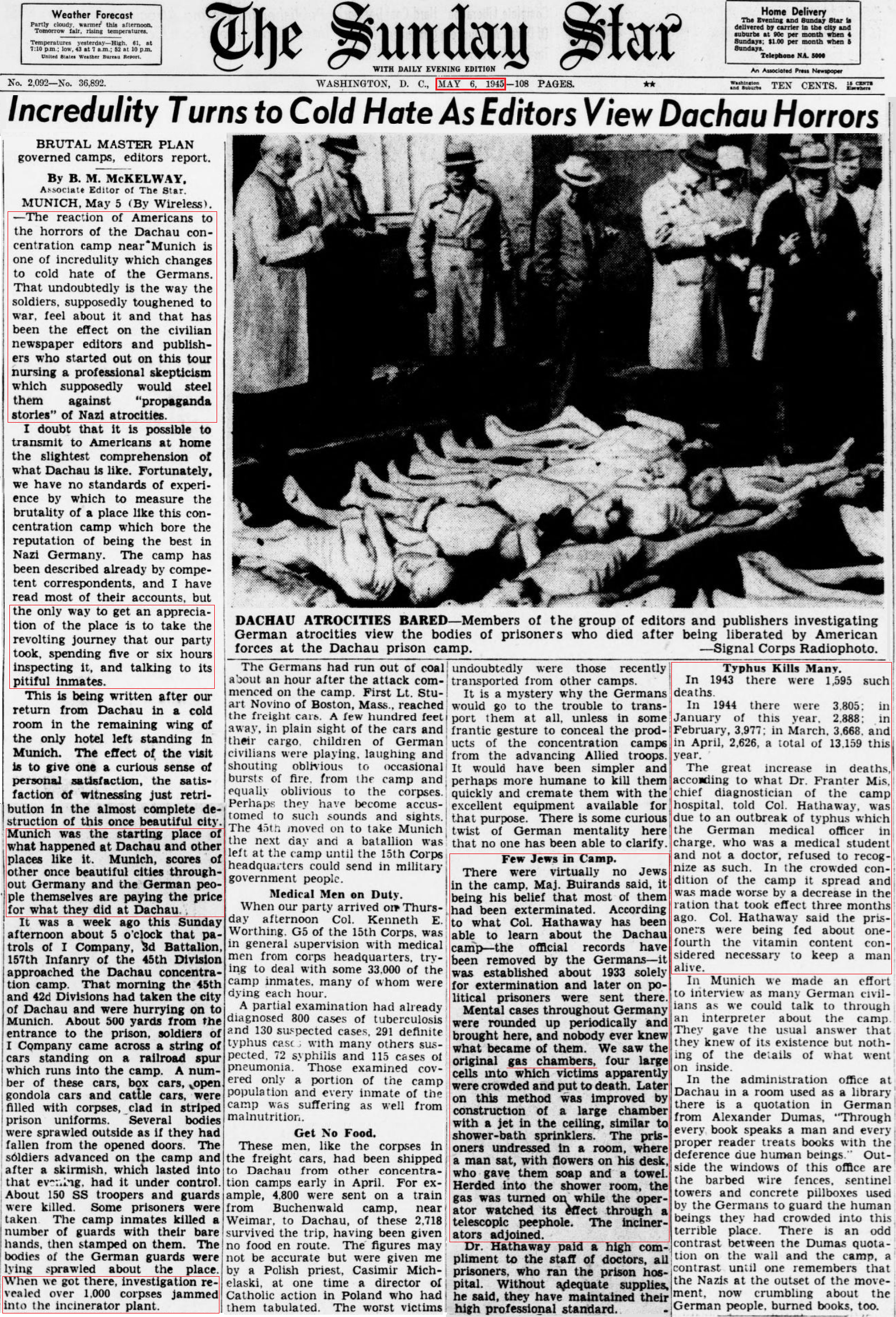
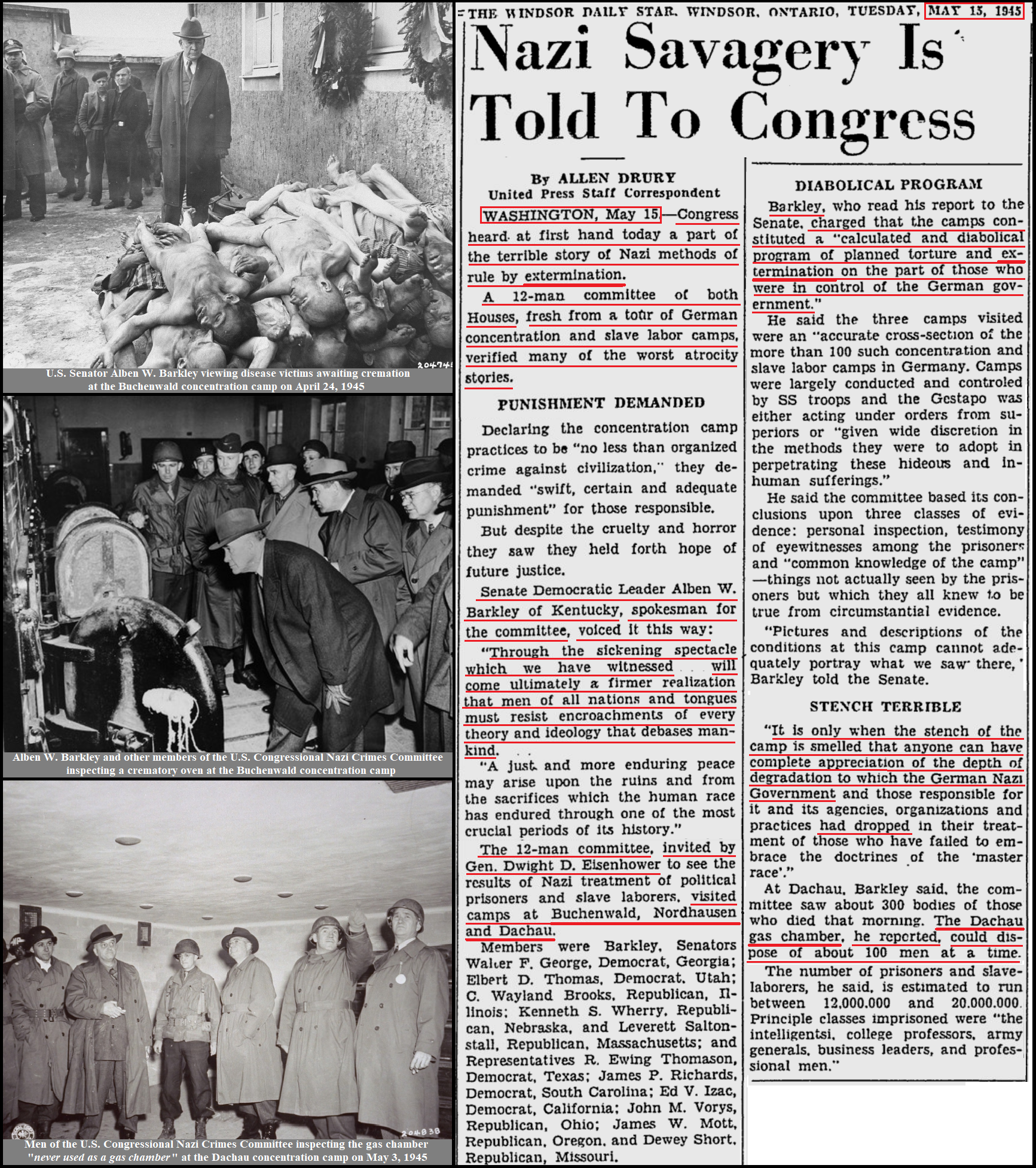
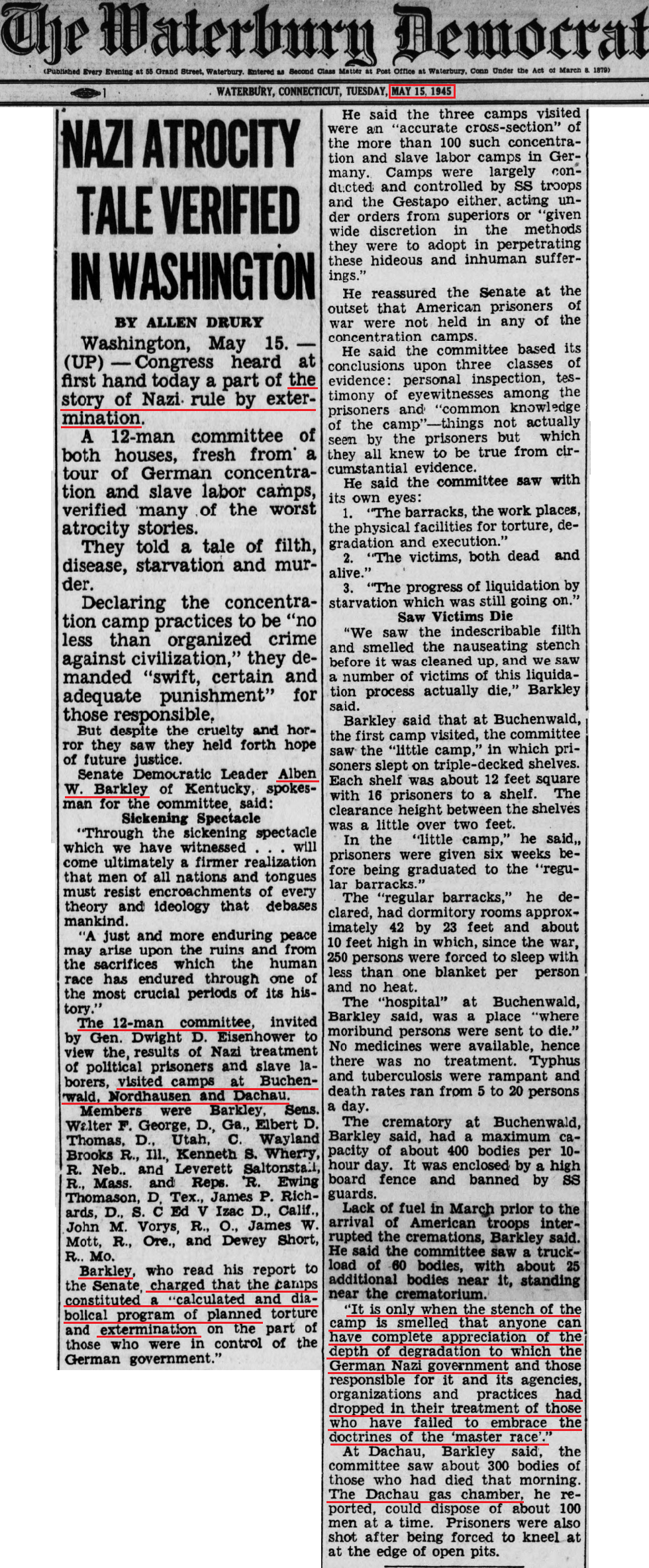
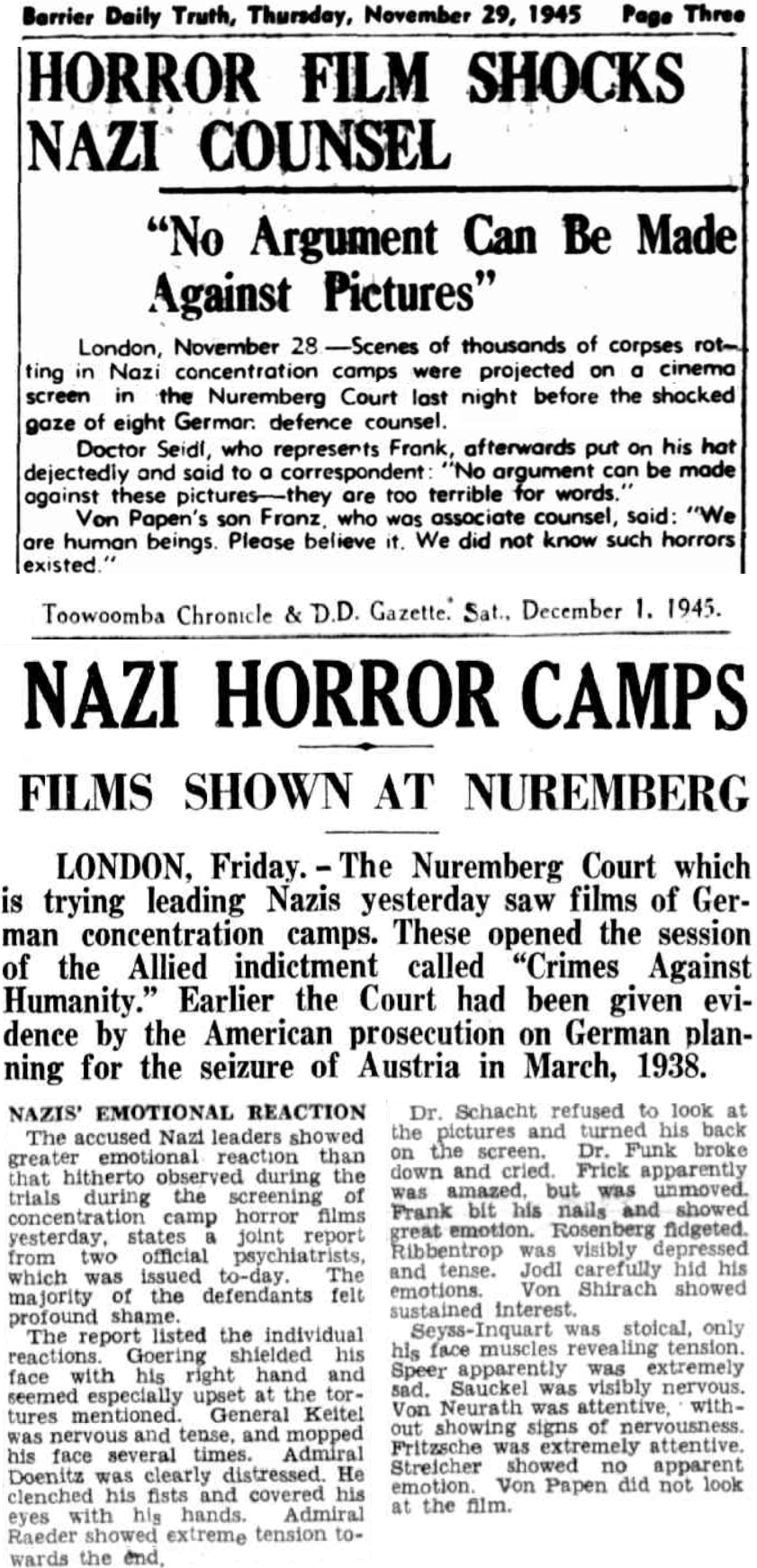
This confirms Eisenhower's personal responsibility for atrocity propaganda in the western camps, in case there was any doubt. (Eisenhower personally invited and ordered 18 newspaper editors, 12 U.S. Congressmen, 10 British Parliamentarians, and every American soldier not at the front to visit Dachau and Buchenwald. This then led to examples like this Senate report which claimed Buchenwald had a "strangling room", this Army report which claimed Dachau gassed people in six gas chambers, and the pseudo-documentary films and trial exhibits about such things as shrunken heads, besides innumerable articles and photo ops. The war veterans themselves became a part of this propaganda push as throughout their lives they've continued to mistakenly claim that people were gassed in these camps.)PRESS: Can you tell us about this wide publication of atrocity stories? Do you think the publication of them is going to be very useful?
GENERAL EISENHOWER: I think I was largely responsible for it, so I must have thought it was useful. When I found the first camp like that I think I never was so angry in my life. The bestiality displayed there was not merely piled up bodies of people that had starved to death, but to follow out the road and say where they tried to evacuate them so they could still work, you could see where they sprawled on the road. You would go to their burial pits and see horrors that really I wouldn't even want to begin to describe. I think people ought to know about such things. It explains something of my attitude toward the German war criminal. I believe he must be punished, and I will hold out for that forever. I think it did good. I think the people at home ought to know what they are fighting for and the kind of person they are fighting. Yes, it did good.
Eisenhower also made a broad remark about denial.
PRESS: How widespread was it? Was it general?
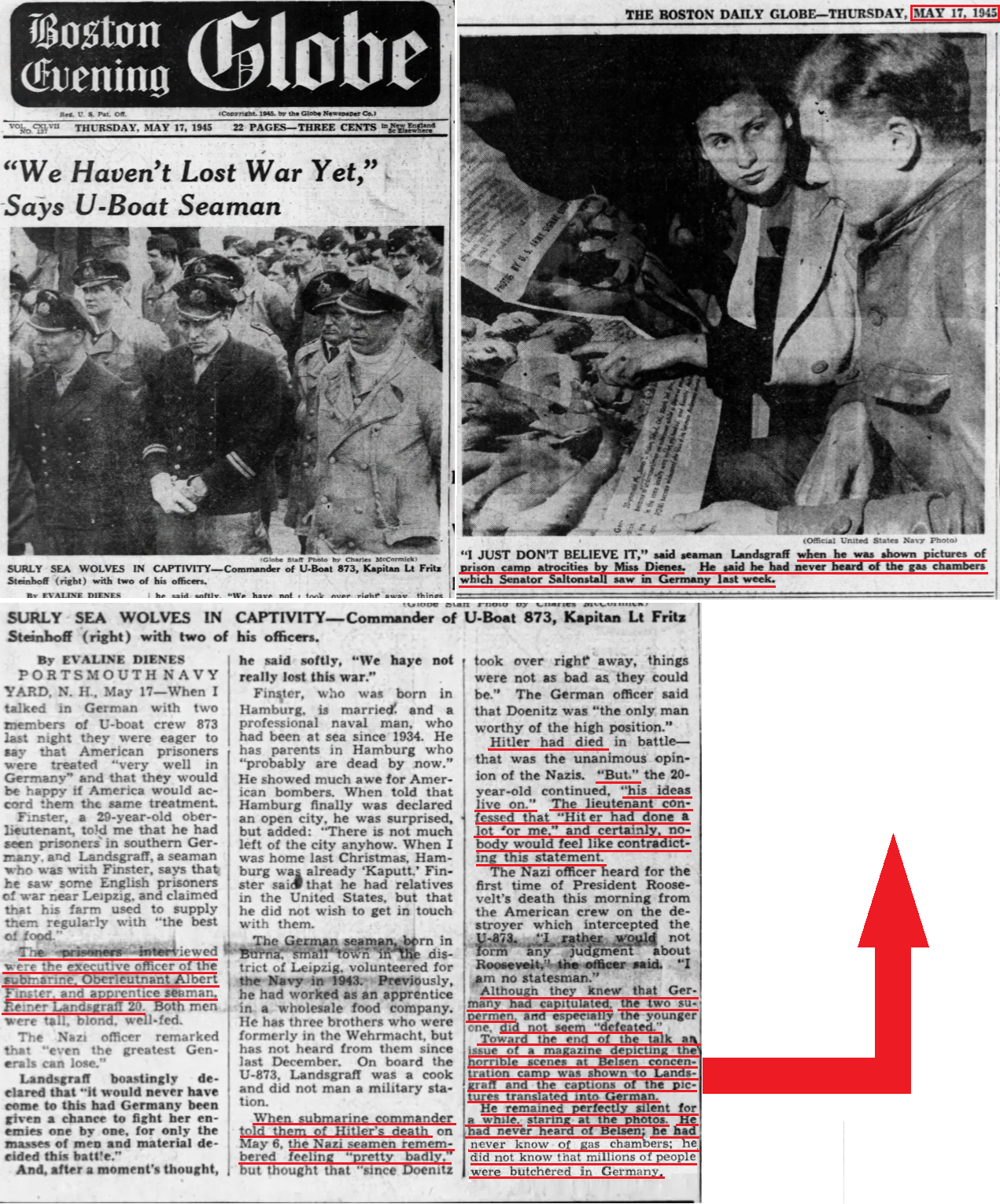
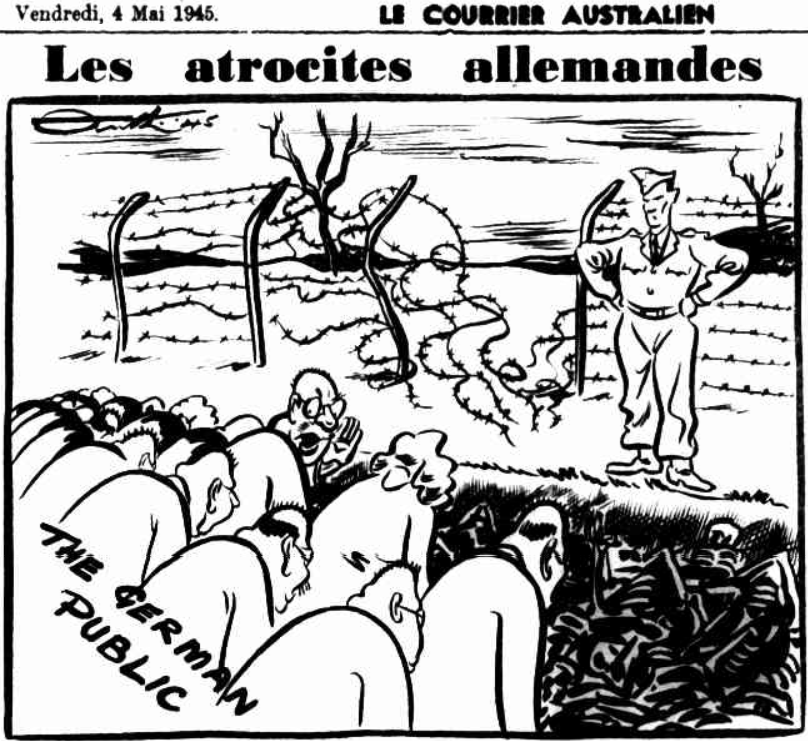
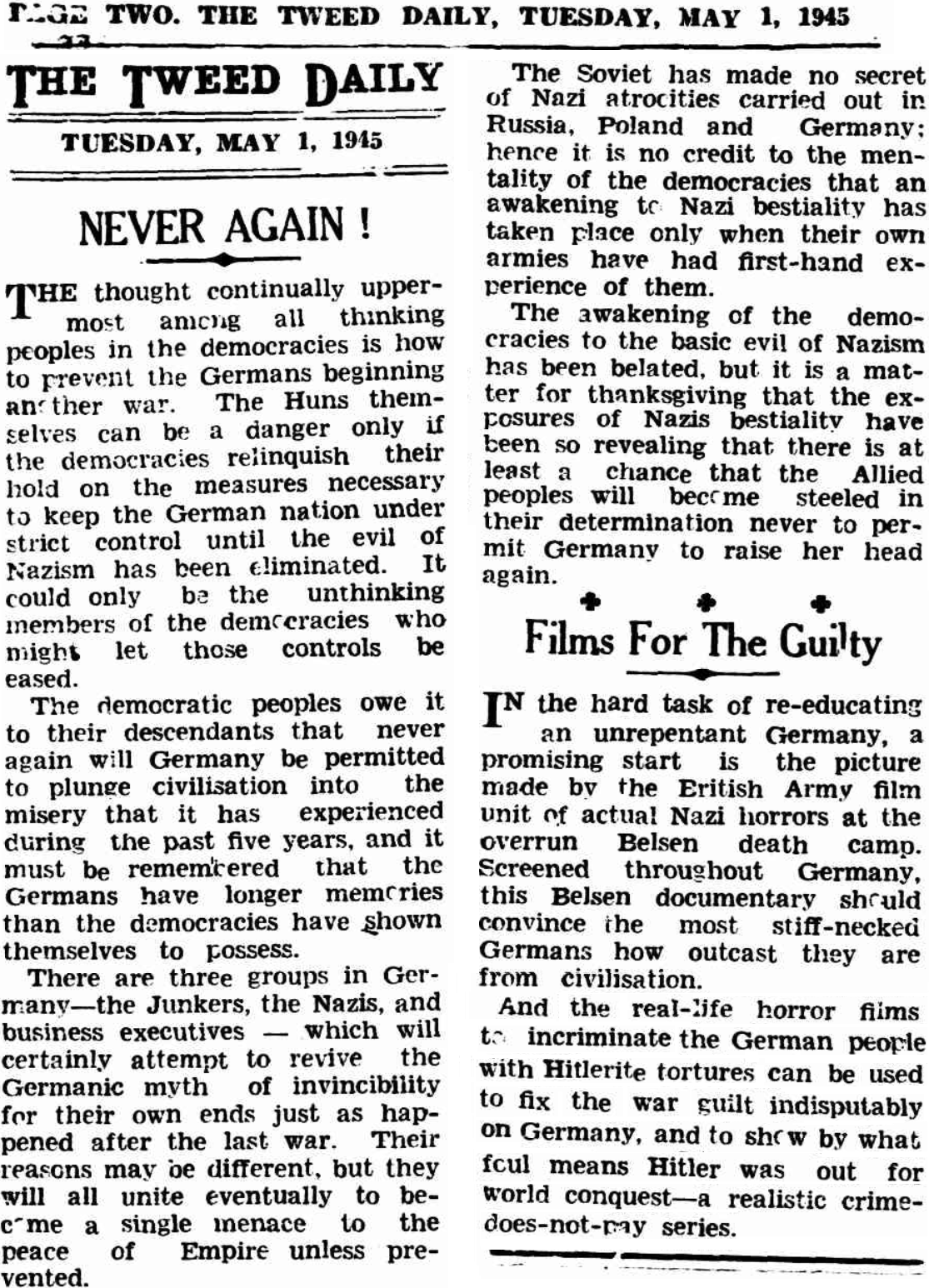
GENERAL EISENHOWER: It's a thing that we have been trying very desperately to find out, whether or not the German population as a whole knew about that. I can't say. It does appear, from all the evidence we can find, that they were isolated areas, and this one piece of evidence of the never being shown the thing and going home and hanging himself would indicate he didn't know about it. On the other hand, what makes the story so thin with me is when we find these very high ranking Nazis denying knowledge of it. If they didn't, they deliberately closed their eyes, that is all. As far as I am concerned, those people are just as guilty as anybody else--those high ranking Nazis--but I think it would be impossible to say, however, the German nation knew it as a whole. But a lot of them know it because I made them go out and give them a decent burial. We made a film an hour long and we have made many Germans look at it, and it is not pretty.