
200 Years Together - Aleksandr Solzhenitsyn, as read by Pete Quinones and commented on by Dr. Matthew Raphael Johnson
https://www.youtube.com/live/Ocgm0cWMyvU
200 Years Together - Solzhenitsyn

Re: 200 Years Together - Solzhenitsyn
Why won't this link embed? Why does the playlist also not embed? Why is it only shareable as a link?
Odd.
Odd.
If I were to guess why no t4 personnel were chosen to perform gassing that had experience with gassing, it would be because THERE WERE NONE.
Re: 200 Years Together - Solzhenitsyn
Apologies Herr Stubble, i'm a boomer and don't know how to embed, so presume it's my fault. As long as the link itself works you should be golden. In fact I recommend going direct with an RSS link and bypass youtube entirely
FWIW as of time of writing this series is up to episode 101.
FWIW as of time of writing this series is up to episode 101.
- pilgrimofdark
- Posts: 488
- Joined: Sat Aug 09, 2025 7:46 pm
Re: 200 Years Together - Solzhenitsyn
Any guesses on whether the "official" translation will actually appear anytime soon? The Solzhenitsyn Center missed their 2025 release date.
The Samisdat edition I found online is somewhat incomplete (~200,000 words), and the version on WikiSpooks is also missing a bit from the Samisdat edition. Together, I think they're as complete an English version as I could find (~320,000 words). I'm not sure what the Omnia Veritas version uses.
There are minor mistakes all over, which you'd expect from a bootleg translation, but it's an extremely readable book. I've read books from major publishers that have more grammatical mistakes than these.
I wonder how an AI translation would compare.
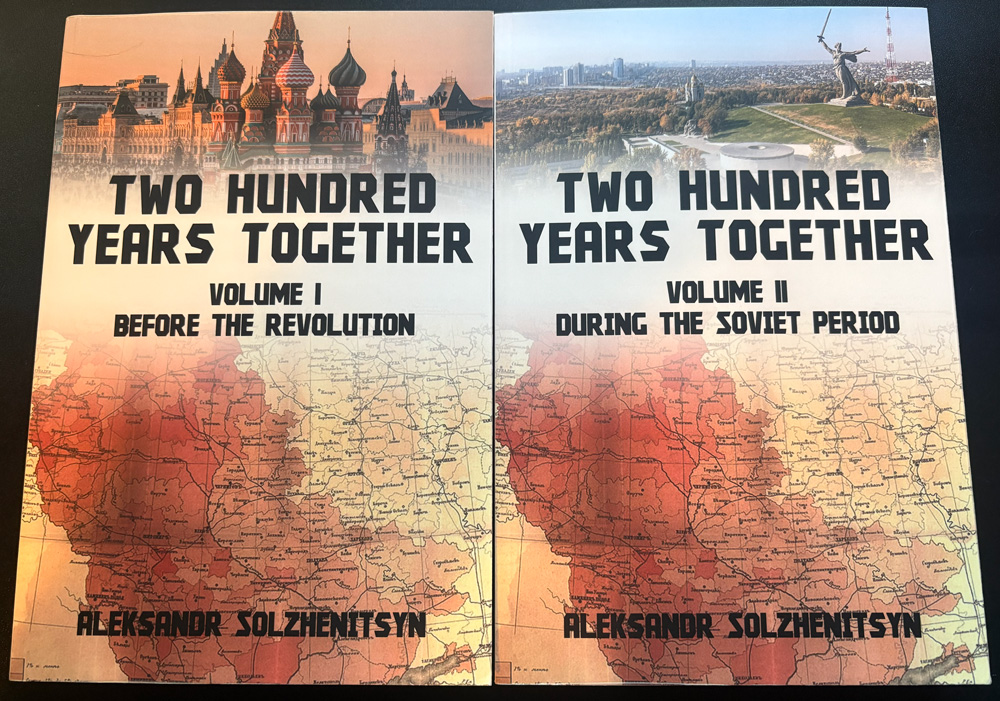
Years ago, I collated all of the text and re-typeset it with footnotes because I wanted to read the book. Designed some covers and sent the PDF files to a print shop and got paperback books.
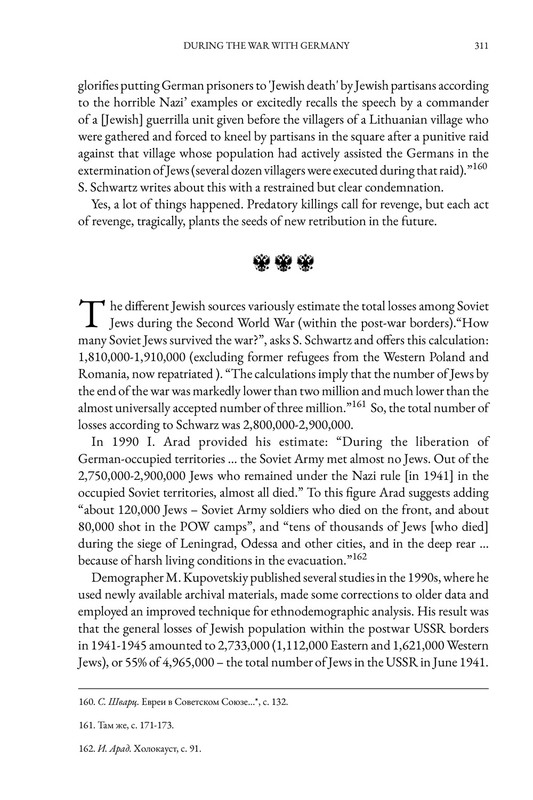 Solzhenitsyn isn't a Holocaust doubter of any sort in the book. He denies the first holocaust (Kishinev 1903) more than the third one (Nazis). The book is valuable for many other reasons, though.
The Samisdat edition I found online is somewhat incomplete (~200,000 words), and the version on WikiSpooks is also missing a bit from the Samisdat edition. Together, I think they're as complete an English version as I could find (~320,000 words). I'm not sure what the Omnia Veritas version uses.
There are minor mistakes all over, which you'd expect from a bootleg translation, but it's an extremely readable book. I've read books from major publishers that have more grammatical mistakes than these.
I wonder how an AI translation would compare.
Years ago, I collated all of the text and re-typeset it with footnotes because I wanted to read the book. Designed some covers and sent the PDF files to a print shop and got paperback books.
Spoiler
Spoiler
Re: 200 Years Together - Solzhenitsyn
No sweat bud, I went to embed it for you yesterday, and it tells me 'this video is unavailable' when I do, when that video is very clearly not unavailable.HansHill wrote: ↑Wed Jan 14, 2026 9:44 pm Apologies Herr Stubble, i'm a boomer and don't know how to embed, so presume it's my fault. As long as the link itself works you should be golden. In fact I recommend going direct with an RSS link and bypass youtube entirely
FWIW as of time of writing this series is up to episode 101.
I tried a few times using different methods. I even tried to embed the playlist.
No dice.
YouTube has a big stiffy for that video series.
Holy Crap Pilgrimofdark,pilgrimofdark wrote: ↑Wed Jan 14, 2026 11:11 pmYears ago, I collated all of the text and re-typeset it with footnotes because I wanted to read the book. Designed some covers and sent the PDF files to a print shop and got paperback books.Spoiler
Any guesses on whether the "official" translation will actually appear anytime soon? The Solzhenitsyn Center missed their 2025 release date.
The Samisdat edition I found online is somewhat incomplete (~200,000 words), and the version on WikiSpooks is also missing a bit from the Samisdat edition. Together, I think they're as complete an English version as I could find (~320,000 words). I'm not sure what the Omnia Veritas version uses.
There are minor mistakes all over, which you'd expect from a bootleg translation, but it's an extremely readable book. I've read books from major publishers that have more grammatical mistakes than these.
I wonder how an AI translation would compare.
Spoiler
Solzhenitsyn isn't a Holocaust doubter of any sort in the book. He denies the first holocaust (Kishinev 1903) more than the third one (Nazis). The book is valuable for many other reasons, though.Spoiler
you are an absolute A N I M A L!
Those look SWEET!
If I were to guess why no t4 personnel were chosen to perform gassing that had experience with gassing, it would be because THERE WERE NONE.
Re: 200 Years Together - Solzhenitsyn
11 months since posting the OP, time sure does fly!
Not sure Herr Stubble, could be a shadowbanning issue, or something to do with monetization. I know PQ's RSS feed is monetized with placement & smart ads, his YT may be similar.
@Pilgrim, the cynic in my wants to say if we haven't seen it before Oct 7th, we won't see it after Oct 7th! Those two aren't thematically linked in any kind of way, but more so about the tightness within which certain narratives will be permitted to be propagated!
Also, i concur with Herr Stubble, that edition looks fantastic

Not sure Herr Stubble, could be a shadowbanning issue, or something to do with monetization. I know PQ's RSS feed is monetized with placement & smart ads, his YT may be similar.
@Pilgrim, the cynic in my wants to say if we haven't seen it before Oct 7th, we won't see it after Oct 7th! Those two aren't thematically linked in any kind of way, but more so about the tightness within which certain narratives will be permitted to be propagated!
Also, i concur with Herr Stubble, that edition looks fantastic
- pilgrimofdark
- Posts: 488
- Joined: Sat Aug 09, 2025 7:46 pm
Re: 200 Years Together - Solzhenitsyn
I still have the print-ready files for the versions I did. I can send them to anyone to wants them, and you can send to any local/online book printing place.
These were some interesting parts from the second volume that I'd collected after reading it. Most of these aren't my views necessarily, but points that Solzhenitsyn raises.
---
Jews supported the destruction of Tsarist Russia, considering it a prison and torture chamber for all six million of them. The February Revolution of 1917 immediately improved the situation of Jews in terms of civil rights.
Despite newspapers reporting pogroms were about to begin or had already begun, there were no pogroms in response to Jews attaining equal rights.
Once Jews were able to move to the cities, they did in huge numbers. In fact, Jews got everything they had desired from the February Revolution. The October (Bolshevik) Revolution was supported simply to deepen the revolution.
Jews in the cities were ideally situated to join the Bolshevik government once it took over. They were some of the highest ranking staff at all levels of the government.
The revolution was of an anti-Russian character, although all ethnicities suffered. However, a special law was passed against anti-semitism, even while the Orthodox clergy were being repressed. In 1918, people caught for "active anti-semitism" could be shot.
Jews from Russia and all over the world came to Soviet Russia, behaving like an invading army in a conquered nation, partly for reasons of revenge against Tsarist Russia.
Despite being a fanatical internationalist, Trotsky was viewed as a hero by leftist Jews, especially in America.
Jews were quite visible in the Cheka, especially as interrogators and commissars. National minorities, which included Jews and other non-Russians, made up 50% of the Cheka administration. Kevin MacDonald examines this issue in his essay "Stalin's Willing Executioners."
In other countries, Jews also played a prominent role in communist revolutions, including Germany (failed) and Hungary (temporarily successful).
After the revolution, anti-semitism was seen as being inherent to Russians themselves. Before, it was seen as inherent in the Tsarist system, but not Russia itself.
Unlike the Russian bourgeoisie, the Jews were protected under the Soviet system. They weren't expelled from the educational institutions, and Jewish merchants found more defenders.
The West looked favorably on the Bolshevik government of the 1920s, expecting a brighter future for Russian Jews. This helped the USSR secure financial aid from America and other countries. Money was also donated by American Jewish organizations.
Although the number of Jews in the Soviet apparatus declined towards the end of the 1920s, their presence was expanded throughout the USSR. Jews became the object of Russian hatred during the period of collectivization when Jewish communists showed up to enforce de-Kulakization.
In the 1930s, Jews made up an increasing percentage of the Soviet security apparatus.
Jews made up a significant part of the ruling class, so also suffered from various purges of that class. However, there was no official anti-Jewish policy in the 1930s. In return, Soviet Jews supported the state.
During World War II, the Soviets were able to evacuate hundreds of thousands of Jews out of areas later conquered by Germany. They were resettled in central Asia or western Siberia.
The Holocaust reignited in Jews their nationalism as Jews, supplanting many other symbols of their Jewishness.
It was only after the war that Jews experienced disappointment in the Soviet Union. Stalin supported the Arab countries over Israel, and viewed Golda Meir's significant support among Jews in the USSR as a threat. He did not support Jews seeing themselves as a separate nation in the USSR.
As a result, Jews were marginalized more in the Soviet apparatus, although the official reasons never mentioned their Jewishness.
Krushchev also disavowed anti-semitism when he took over. At the end of the 1950s, he realized "the key spheres of the Soviet economy are plagued by rampant theft and fraud." New laws to combat this ended up rounding up mostly Jews, so were seen as anti-Jewish.
Soviet anti-Zionism helped Jews break away from Bolshevism. And in turning away from it, they turned against it. The Jews discovered that, under the Soviet Union, they were the main victims, enduring nothing but suffering! So they became the intellectual opposition to the USSR.
Instead of taking any responsibility for their support of and service for the Soviet system, Jews now heavily criticized the Russians again. They opposed a revitalizing of Russian culture.
The 1967 Six Day War provided an impetus to Jews to leave the Soviet Union. Many went to Israel or the USA. This exodus of Jews further increased Jewish nationalist feeling throughout the world.
Leaving Russia, the Jews had to consider where to go and whether to assimilate. Of course, this question is always ongoing, wherever Jews go, even Israel.
These were some interesting parts from the second volume that I'd collected after reading it. Most of these aren't my views necessarily, but points that Solzhenitsyn raises.
---
Jews supported the destruction of Tsarist Russia, considering it a prison and torture chamber for all six million of them. The February Revolution of 1917 immediately improved the situation of Jews in terms of civil rights.
Despite newspapers reporting pogroms were about to begin or had already begun, there were no pogroms in response to Jews attaining equal rights.
Once Jews were able to move to the cities, they did in huge numbers. In fact, Jews got everything they had desired from the February Revolution. The October (Bolshevik) Revolution was supported simply to deepen the revolution.
Jews in the cities were ideally situated to join the Bolshevik government once it took over. They were some of the highest ranking staff at all levels of the government.
The revolution was of an anti-Russian character, although all ethnicities suffered. However, a special law was passed against anti-semitism, even while the Orthodox clergy were being repressed. In 1918, people caught for "active anti-semitism" could be shot.
Jews from Russia and all over the world came to Soviet Russia, behaving like an invading army in a conquered nation, partly for reasons of revenge against Tsarist Russia.
Despite being a fanatical internationalist, Trotsky was viewed as a hero by leftist Jews, especially in America.
Jews were quite visible in the Cheka, especially as interrogators and commissars. National minorities, which included Jews and other non-Russians, made up 50% of the Cheka administration. Kevin MacDonald examines this issue in his essay "Stalin's Willing Executioners."
In other countries, Jews also played a prominent role in communist revolutions, including Germany (failed) and Hungary (temporarily successful).
After the revolution, anti-semitism was seen as being inherent to Russians themselves. Before, it was seen as inherent in the Tsarist system, but not Russia itself.
Unlike the Russian bourgeoisie, the Jews were protected under the Soviet system. They weren't expelled from the educational institutions, and Jewish merchants found more defenders.
The West looked favorably on the Bolshevik government of the 1920s, expecting a brighter future for Russian Jews. This helped the USSR secure financial aid from America and other countries. Money was also donated by American Jewish organizations.
Although the number of Jews in the Soviet apparatus declined towards the end of the 1920s, their presence was expanded throughout the USSR. Jews became the object of Russian hatred during the period of collectivization when Jewish communists showed up to enforce de-Kulakization.
In the 1930s, Jews made up an increasing percentage of the Soviet security apparatus.
Jews made up a significant part of the ruling class, so also suffered from various purges of that class. However, there was no official anti-Jewish policy in the 1930s. In return, Soviet Jews supported the state.
During World War II, the Soviets were able to evacuate hundreds of thousands of Jews out of areas later conquered by Germany. They were resettled in central Asia or western Siberia.
The Holocaust reignited in Jews their nationalism as Jews, supplanting many other symbols of their Jewishness.
It was only after the war that Jews experienced disappointment in the Soviet Union. Stalin supported the Arab countries over Israel, and viewed Golda Meir's significant support among Jews in the USSR as a threat. He did not support Jews seeing themselves as a separate nation in the USSR.
As a result, Jews were marginalized more in the Soviet apparatus, although the official reasons never mentioned their Jewishness.
Krushchev also disavowed anti-semitism when he took over. At the end of the 1950s, he realized "the key spheres of the Soviet economy are plagued by rampant theft and fraud." New laws to combat this ended up rounding up mostly Jews, so were seen as anti-Jewish.
Soviet anti-Zionism helped Jews break away from Bolshevism. And in turning away from it, they turned against it. The Jews discovered that, under the Soviet Union, they were the main victims, enduring nothing but suffering! So they became the intellectual opposition to the USSR.
Instead of taking any responsibility for their support of and service for the Soviet system, Jews now heavily criticized the Russians again. They opposed a revitalizing of Russian culture.
The 1967 Six Day War provided an impetus to Jews to leave the Soviet Union. Many went to Israel or the USA. This exodus of Jews further increased Jewish nationalist feeling throughout the world.
Leaving Russia, the Jews had to consider where to go and whether to assimilate. Of course, this question is always ongoing, wherever Jews go, even Israel.