Archie wrote: ↑Sat Sep 26, 2026 7:02 pmDismissing my point with "yawn" is unsupported disagreement. Please review the forum rules again: "
Refrain from unsupported disagreement. This means that if you disagree with something or think it is incorrect, you must explain why you disagree or show why it's incorrect. A mere expression of disapproval is not sufficient."
If you think this sort of discussion is "boring" then I have to wonder why you joined here and why you've been spamming the board with so many posts. Seems like you are here to flood the board with nonsense and are not interested in engaging in anything substantive.
Are you a little nervous about my presence? My interests revolve around the Holocaust and refuting revisionist rhetoric, but I’m also interested in refuting all the other common neo-Nazi claims (Judeo-Bolshevism, Hitler didn’t start the war, Germany was the victim, etc.). That’s perfectly compatible with the forum’s goal, which is to debate everything related to the period from 1933 to 1945. If that’s not possible, just change the rules and say, “We only discuss the Holocaust here,” and problem solved.
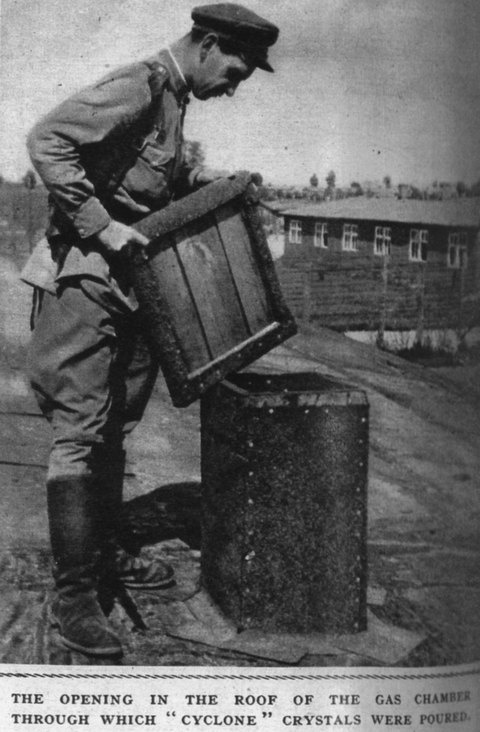
Archie wrote: ↑Sat Sep 26, 2026 7:02 pmThe laundry room hoax is the most laughable thing at Majdanek but all of the "gas chambers" at that camp are dubious. The shower room at the Bath and Disinfection station is a real shower room and it's full of windows. Very early on, it was claimed people were gassed in the shower room (see clip below) but because it's obviously unsuitable for gassings the Soviets soon modified the story to say that the victims were gassed
after being given a real bath. The logic of that escapes me. The small brick building is also claimed for gassings. The one side has blue stains indicating that Zyklon B was certainly used there. But there are no Zyklon holes and hence no way to introduce Zyklon B into a room full of people. So now they claim the room did double duty: they fumigated clothes with Zyklon B they but ALSO occasionally gassed people - with carbon monoxide! The story is totally incoherent. They cling to it only because if they admit Majdanek was a hoax it would cast doubt on all the other "gas chambers" at Auschwitz and elsewhere.
[...]
The Auschwitz I gas chamber is an obvious fake. The Zyklon B holes were added by the Poles after the war. There are photos of the roof in 1945 and there's nothing there. We know there were no holes and that the reconstruction was a fraudulent because they "restored" the holes in the wrong places. They measured from the ends of the room as it was after the war without realizing that a wall had been knocked out. If there had really been any holes, it would have been clear where they had been filled in.
[...]
The shower room in the building they called “Bath and Disinfection” (Barrack 41) was exactly that—a real shower room with big windows. When the Soviets liberated the camp in July 1944, some of their early reports and footage mixed things up and made it sound like people were gassed right there. That was a mistake. The State Museum at Majdanek corrected it years ago. Today the museum is clear: that room was for bathing and disinfection. People went in, showered, and in some cases their clothes were handled separately. There’s no mysterious “logic that doesn’t make sense.” The first Soviet reports just got some details wrong, and later research with the original plans and witness statements cleared it up.
The brick building behind it—the gas-chamber bunker—is a different story. That one was used for killing. The walls and ceiling still show heavy blue staining. Those stains are ferrocyanide, what’s called Prussian blue, and they only form after prolonged exposure to hydrogen cyanide—the gas released by Zyklon B. That’s been chemically confirmed. Several of the chambers also have perforated metal pipes running about a foot off the floor, connected to a small annex where gas cylinders were kept. Those pipes aren’t for killing lice. Carbon monoxide doesn’t kill insects; it only kills warm-blooded creatures. So the only reason to install those pipes was to murder people.
There’s a specific document: the sworn statement of Friedrich Wilhelm Ruppert, the head of Majdanek’s technical department, dated August 6, 1945 (Nuremberg document NO-1903). Ruppert describes “a solid stone building about 6 by 6 meters and roughly 2 meters high, with two doors… Outside the building was a little annex where the gas cylinder was stored.” That matches the bunker that still stands today.
Hundreds of Zyklon B cans were also found in the camp—more than 500 according to the joint Soviet-Polish inventory from August 1944—along with several gas cylinders. Contemporary chemical tests confirmed the cans contained hydrogen cyanide and that at least some of the cylinders held carbon monoxide. There are statements from prisoners who worked in the clothing-disinfection area and saw the same spaces, or rooms right next to them, used both for clothes and for people. The museum still states that Jews and other prisoners were murdered in that brick building between 1942 and 1943, using both Zyklon B and carbon monoxide.
As for the “laundry”: nearby there were drying and clothing-disinfection facilities. Some of those rooms also show blue stains because Zyklon B was used to delouse clothing. That doesn’t turn everything into a hoax. The Nazis used the same product for two different purposes. It’s not incoherent; it’s practical and brutal.
Now Auschwitz I, Crematorium I.
The large morgue in that building was turned into a provisional gas chamber at the end of 1941. Holes were punched in the flat roof, short wooden chimneys with lids were added, and ventilation was installed. The first gassings took place there, including the one on February 15, 1942 with Jews from Upper Silesia. Once the big installations at Birkenau came online, this site stopped being used for mass killings. In 1944 it was converted into an air-raid shelter: the introduction holes were sealed, partition walls were put in, and the doors were altered.
After the war, between 1946 and 1947, the Polish authorities partially restored its original appearance as a gas chamber. They removed the air-raid shelter partitions and reopened several of the holes. The key witness is Adam Złobnicki, a Pole who was present during that reconstruction. In a 1981 statement he said, word for word: “I remember perfectly well that the openings for the introduction of Zyklon B which were located on the flat roof of this crematorium were also remade. The reconstruction was made easier by the fact that at the locations of the former insertion openings there remained clear traces after the sealing of the former openings with cement. At these very points the openings were re-established and the little chimneys were raised. This work, too, was done in 1946–1947.”
That lines up with what’s visible today. Forensic examinations by Daniel Keren, Jamie McCarthy, and Harry Mazal (published in 2000 and used in the David Irving trial) looked at the roof. They found sealing marks in the concrete that match the positions of the restored holes. They also saw that the reinforcing bars (rebar) had been deliberately cut in a square pattern exactly where the original holes had been. Photographs of the roof taken in 1945, before the restoration, show stains and sealed areas that, once you adjust for the wall that was knocked out after the war, line up with the current positions.
The Auschwitz Museum itself explains it on their website: “The furnaces and the chimney were dismantled, and the holes in the roof used for introducing Zyklon B were closed. Two of the three furnaces and the chimney were reconstructed (from the original parts), and several of the holes in the roof of the gas chamber were reopened.”
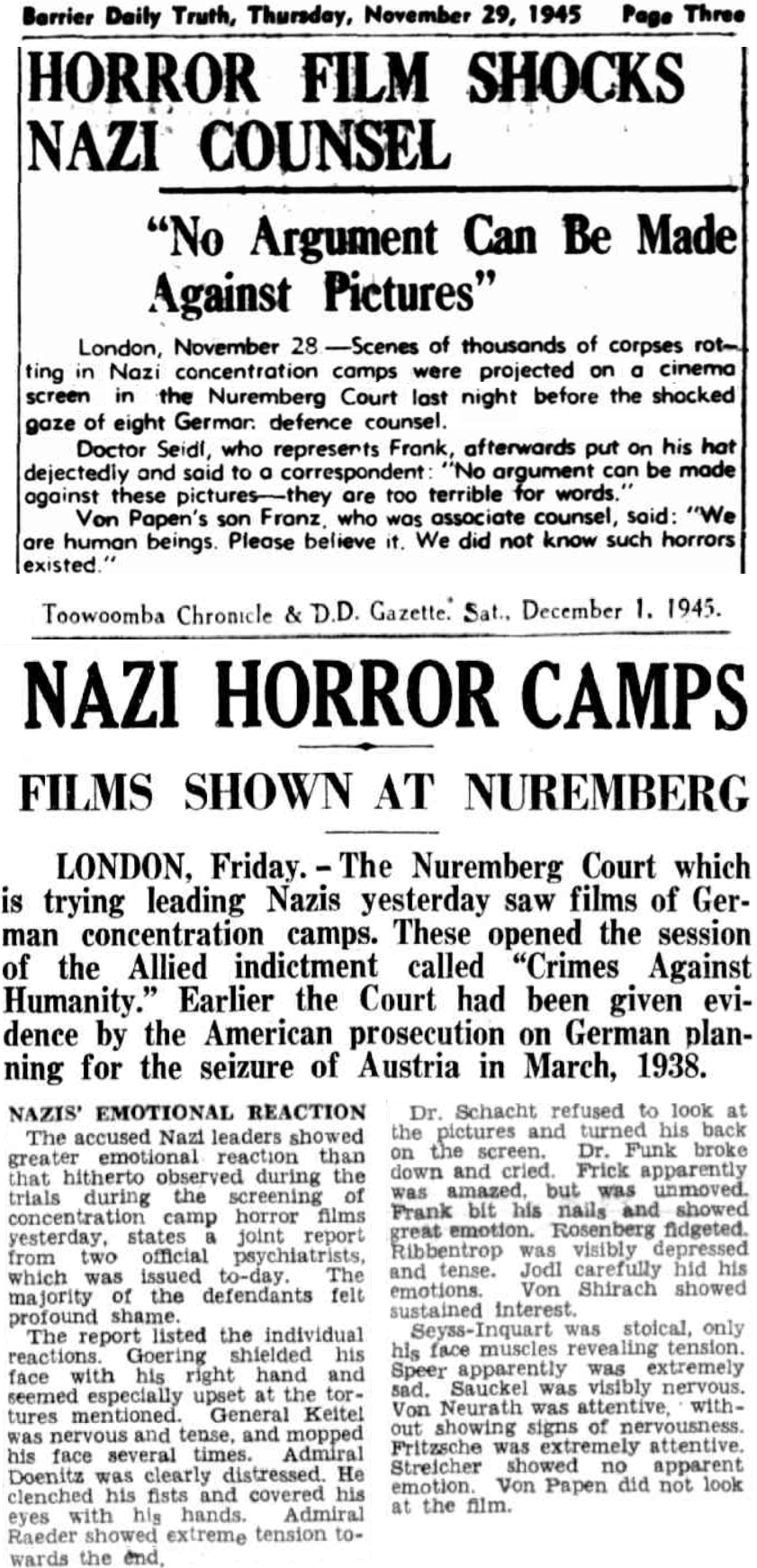
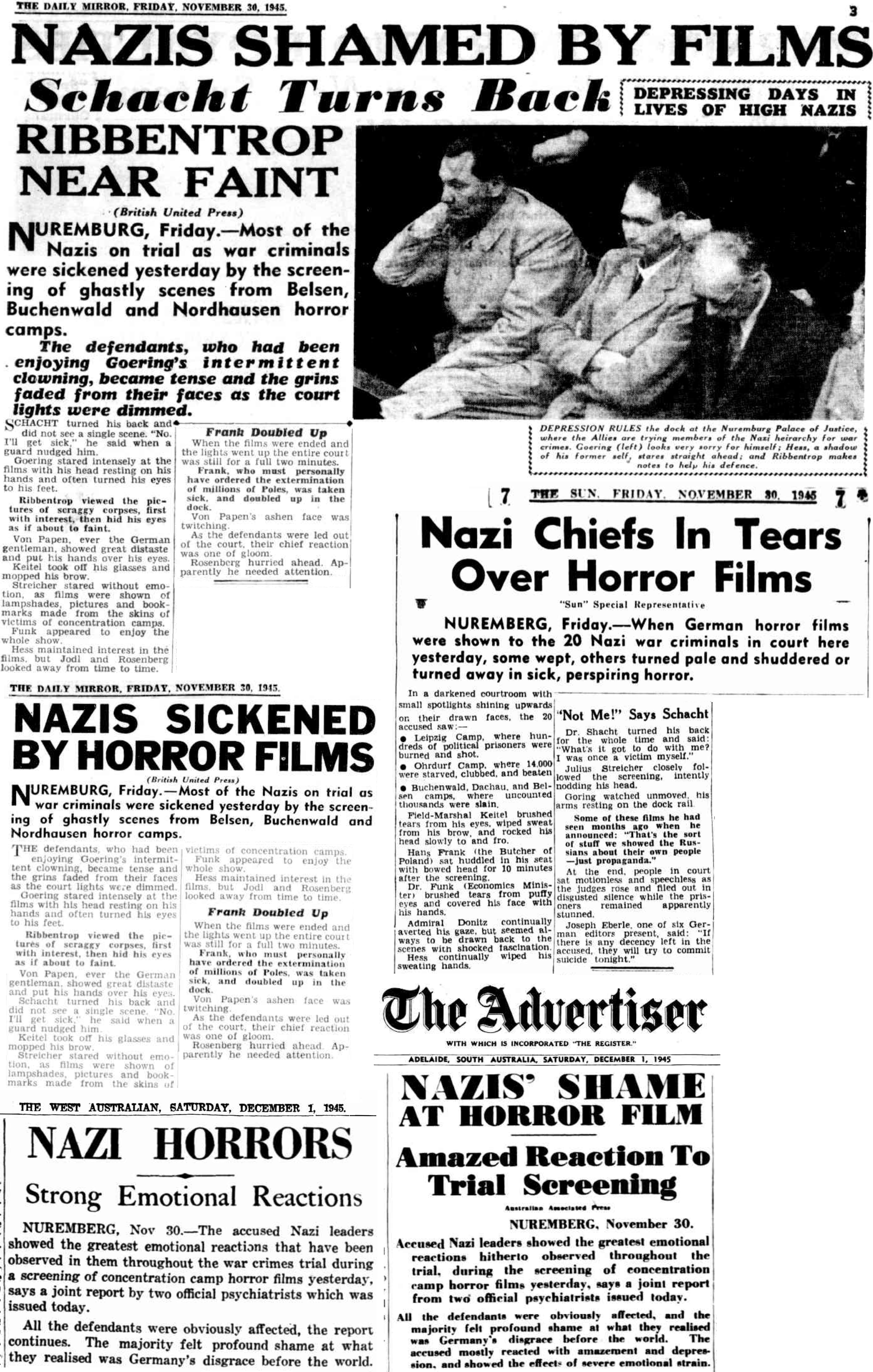
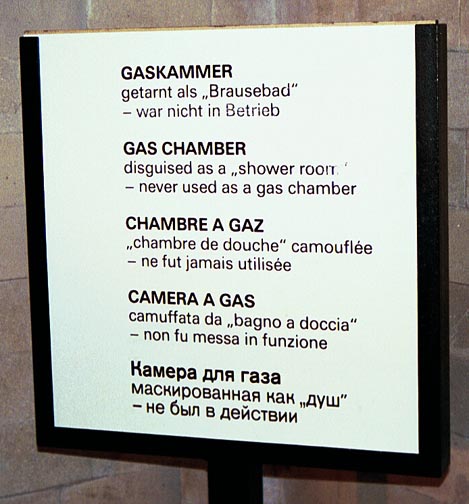
Archie wrote: ↑Sat Sep 26, 2026 7:02 pmYou claim that the Dachau gas chamber being fake means "absolutely nothing." I disagree because quite obviously it destroys the credibility of the "investigations" you were just touting. See for yourself what the Americans were claiming about this in 1945.
[...]
No. I didn’t say that. Dachau was a slave labor camp designed primarily to repress political opponents. Its main purpose was not to kill, although there were undoubtedly shootings of prisoners almost from the very beginning [see Waschmann]. In other concentration camps within the KL system, such as Mauthausen, gassings did occur, but on a small scale. It is most likely that the Nazis attempted to build a functional gas chamber at Dachau to take revenge by murdering the last remaining prisoners and opponents, but they never actually used it.
Dachau is irrelevant to the Holocaust, and the alleged forgery does not invalidate the overwhelming evidence of mass murders outside of Dachau. Just as the discovery that a specific Stalin-era gulag was actually a children's amusement park does not refute the existence of the gulag system or the NKVD's mass executions
http://holocaustcontroversies.blogspot. ... l#dachaugc