Page 3 of 3

Re: Abraham Krzepicki

Posted: Sun Mar 15, 2026 9:14 pm
by pilgrimofdark
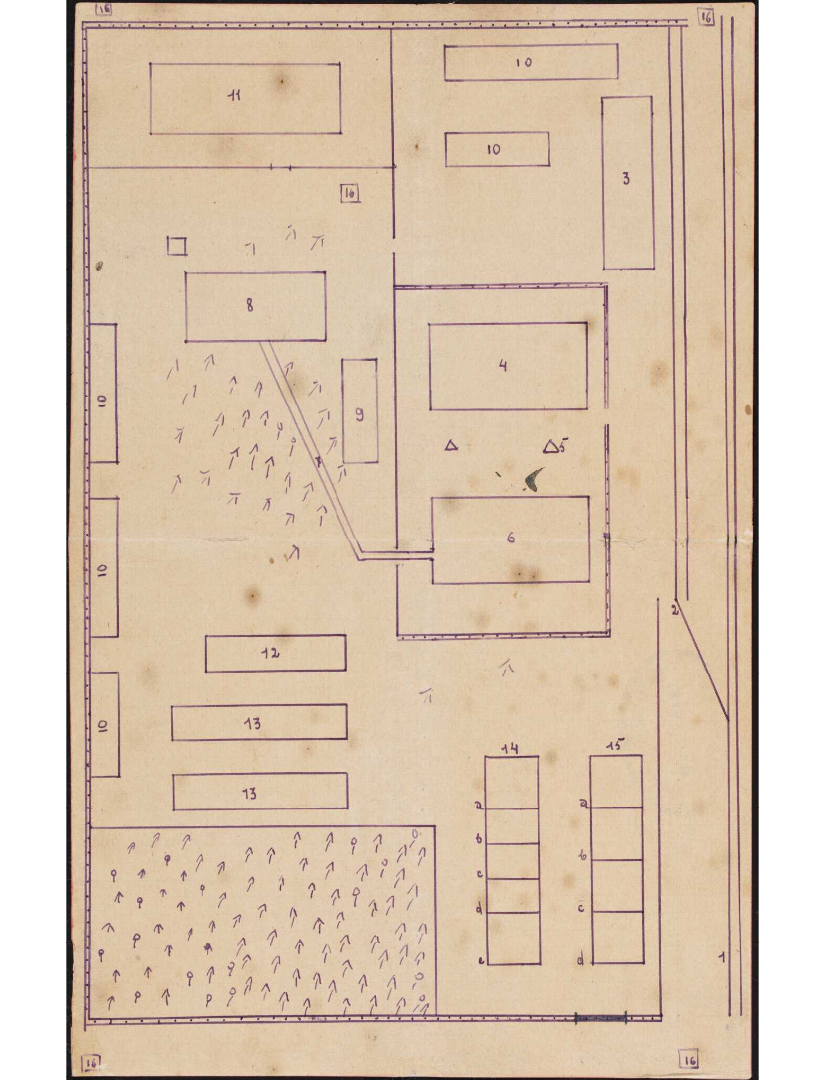
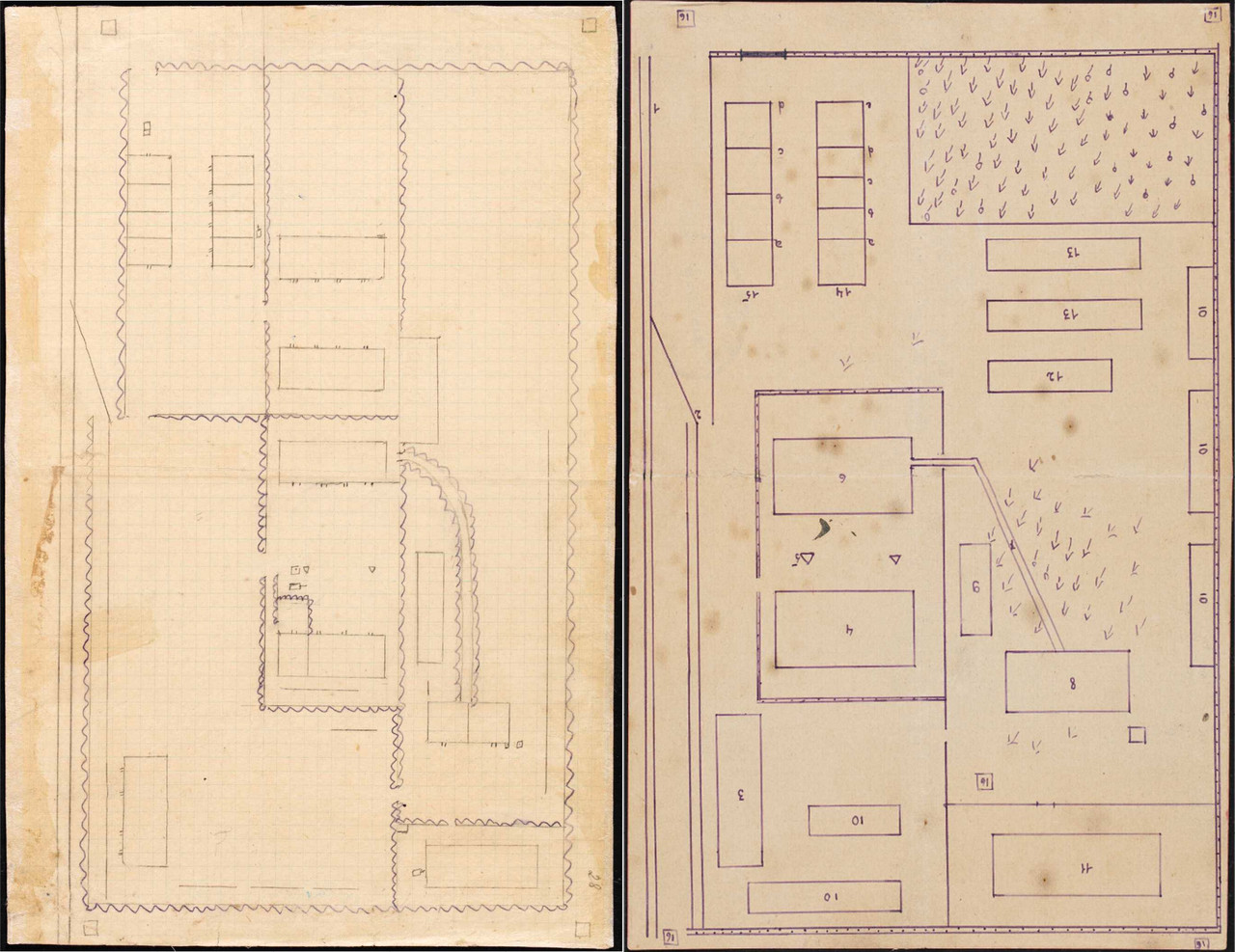
The short account written by two people in Polish handwriting seems to be a complete mystery that historians simply don't acknowledge.

In Warsaw Testament, Rachel Auerbach has some background on writing Krzepicki's testimony (in Yiddiah), and nothing is mentioned about this shorter Polish version.

Auerbach says he was using his father's papers (name Abraham), and she only later learned from Krzepicki's brother that his real name was Jakub/Yaakov (despite that being on the contact card accompanying his account that she wrote).

She says she was writing the testimony over the winter of 1942-1943. At the beginning of December, Auerbach was living in an apartment at Nalewki 37, which was assigned to the workers of the artificial honey factory.

Krzepicki was her neighbor at Nalewki 37. But Krzepicki had been arrested at the artificial honey factory at Zamenhofa 19 in August. Then he escaped Treblinka on September 13, and returned to the Warsaw Ghetto after a month. But then he goes right back to the artificial honey factory :?:

Nalewki 37 and Zamenhofa 19 were basically on the same block. Zamenhofa on the west, Nalewki on the east.

The Warsaw Ghetto: A Guide to the Perished City knows nothing about artificial honey factories near these addresses.

---

In the Yiddish notebook (not rediscovered until 1950?), there's a note by Auerbach on its own page in the middle of Krzepicki's narrative:
Such a beautiful sky and the forest with trees in it. The world is too small for me. I analyse whether I am happy or unhappy. Either way, I must live. I want to die of natural causes.
Krzepicki's account was supposedly first published in 1956 by the Jewish Historical Institute.

Auerbach had immigrated to Israel in 1950 -- before the milk cartons were found.

However, Ber Mark (also of the Jewish Historical Institute) published a book of poetry in 1954, which includes the note from Auerbach, transformed into a poem:
The sky is so blue
In this world
I have no space
A forest full of trees
I look around
Am I happy?
Or unhappy.
I must live
I want to die a natural death.
Auerbach writes that "after Ber Mark returned from the Soviet Union, I let him look at my wartime notebooks." The buried Krzepicki notebooks would not have been found by this time.

Ber Mark could have gotten the note from this one unnumbered page from the recovered RA documents. Or he could have been shown it by Auerbach herself in her "wartime notebooks," which is more indication that the Krzepicki notebooks weren't buried, along with the anachronistic dating.
Re: Abraham Krzepicki

Posted: Tue Mar 17, 2026 1:26 am
by Stubble
We need Dean to expound on the apartment bit. He has some info on that I don't think he has spilled yet.

It's patently absurd.

Guy gets arrested and deported to a death camp then runs back to where he got arrested?

One would think he would join a band of partisans in the forest and try to mount an assault on the 'death camp' to save his brethren...

Not run back to the ghetto to get shot.

Re: Abraham Krzepicki

Posted: Sat Mar 21, 2026 3:00 pm
by pilgrimofdark
Something must be wrong with the known chronology related to Krzepicki and Auerbach.

If Auerbach (and various secondary sources) are correct about Auerbach working with Krzepicki until March 7 on the long (Yiddish) account,

and the Jewish Historical Institute is also correct that the milk cans were buried in "early February" (or at all in February).

and if the Jewish Historical Institute is also correct that the shorter (Polish) account is an "abridged and slightly altered" testimony...

Then that puts both Krzepicki accounts outside of the known timeline for when the milk cans were buried, and puts them outside of the Warsaw Ghetto after Auerbach leaves on March 7. They're on the Aryan side with Wiernik, Berman, Krzywoszewski, etc.

This puts the Krzepicki accounts closer in time and place to the "Wiernik Writers Group" collaborative first-person eyewitness account.

And in fact, there were two "Auerbach Archives" that are separate from the Ringelblum Archive metal tins/milk cans.
With the help of Polish friends, Auerbach buried her writings in two different locations in Warsaw, on the grounds of the Zoo and in a field in the southern district of Mokotów. Both caches survived the war.

- Kassow, Samuel. “The Warsaw Ghetto in the Writings of Rachel Auerbach.” In Warsaw. The Jewish Metropolis: Essays in Honor of the 75th Birthday of Professor Antony Polonsky. p. 511.
Interestingly, Auerbach also wrote a "script regarding the uprising in Treblinka." Two versions are typed in Polish, and more pages in handwritten Polish. It seems to be undated, but probably postwar. Link

Re: Abraham Krzepicki

Posted: Sat Mar 21, 2026 6:39 pm
by Stubble
I get a message that the jewish historical institute is doing a server migration when I go to look at source.

I'm assuming that Pandora's metal boxes are the source for the 1956 version. I'm also making a leap that this is the 'longer' version compiled in '43.

Assuming pandora's milk cans and metal boxes were indeed buried in February, and Auerbach was interviewing him up to March, this indeed creates a chronology issue and being on the Aryan side moves the contents from the Auerbach Dungeons & Dragons writing group into the Warsaw Circus with Wiernick et al.

This seems to put a nice bow on the whole project tying both atrocity propaganda stories to the same people and illustrating the cross pollination, who was responsible and how and when it happened.

Explaining the insertion of the Auerbach notebooks into the caches at a later date ain't so hard, assuming she can be shown to have been involved with either the recovery or the cataloging. In both cases and with both recovery and cataloging, that's a big check mark.

Re: Abraham Krzepicki

Posted: Sat Mar 21, 2026 7:08 pm
by pilgrimofdark
Stubble wrote: Sat Mar 21, 2026 6:39 pmI'm assuming that Pandora's metal boxes are the source for the 1956 version. I'm also making a leap that this is the 'longer' version compiled in '43.
Milk cans are the source for both the Yiddish (long) and Polish (short) accounts.

The one printed in the 1956 Yiddish journal/paper is the long version handwritten by Auerbach.

Thankfully, I downloaded all the Ringelblum Archive in English volumes months ago before the JHI archives went down. That has translations of both accounts, although we have an AI translation of the short one on the Wiki. The long one is basically Donat, but with the passages Donat omitted plus Auerbach's weird interjections (about Krzepicki having military training in a gas chamber, etc.).
Stubble wrote: Sat Mar 21, 2026 6:39 pmAssuming pandora's milk cans and metal boxes were indeed buried in February, and Auerbach was interviewing him up to March, this indeed creates a chronology issue and being on the Aryan side moves the contents from the Auerbach Dungeons & Dragons writing group into the Warsaw Circus with Wiernick et al.

This seems to put a nice bow on the whole project tying both atrocity propaganda stories to the same people and illustrating the cross pollination, who was responsible and how and when it happened.
Metal boxes in January. Milk cans in February. That explains all the "ARG I / Ring. I" or "ARG II / Ring. II" references to archives: which container type they were dug out of.

The accounts being outside the Ghetto after March 1943 at least points to different answers to some questions.

Why do Krzepicki and Wiernik both have a short account written in Polish by numerous people, mentioning chlorine in a homicidal context? Why are their long accounts so similar?

Otherwise, the chronology is just broken and unexplained as of yet. Or we're missing something, which is always a possibility.

Re: Abraham Krzepicki

Posted: Sat Mar 21, 2026 7:22 pm
by Stubble
Tentative answer to both questions regarding similarities, because there was a soviet propagandist embedded with these various polish underground propaganda efforts as a 'handler'. I say this because the 'chlorinated lime of death' atrocity tale was of Soviet origin. Point of contact for a handler would have been what's his nuts, the guy that was issuing the payouts to Wiernick's 'working group' (Berman). I think he bridges the gap between the Auerbach Dungeons & Dragons group and the Wiernick circle jerk as well, nicely tying this all together.

Re: Abraham Krzepicki

Posted: Sat Mar 21, 2026 7:34 pm
by pilgrimofdark
Adolf Berman. Yeah, during the war, while he's working for Zegota (Council to Aid Jews), he's handing out payments to Wiernik and other Jews to keep them alive.

Then after the war, his brother Jakub -- working for the Soviet occupation government of Poland in the Ministry of Public Security -- arrests Polish members of Zegota, keeping them in prison for upwards of a decade.

Re: Abraham Krzepicki

Posted: Sat Mar 21, 2026 7:38 pm
by Stubble
Well, only if the members are, unreliable...

This of course leads to a question, if the Einsatzgruppen were indeed doing 'intelligensification', why were these people alive to be thrown in prison by the Soviet? We know they were writing atrocity propaganda and generally being a nuisance.

https://en.wikipedia.org/wiki/%C5%BBegota

These are not 'unknowns', these are prominent jews that were academics and thinkers.

The Żabińskas seem to have overlap with the Ringlebaum group and would have had ties to the Wiernick group through Berman. I say this because some of Pandora's milk cans were recovered from the zoo IIRC.

(I didn't recall correctly, and am dead wrong. Pandora's milk cans were recovered from near a school)

Re: Abraham Krzepicki

Posted: Sat Mar 21, 2026 10:14 pm
by pilgrimofdark
This is in Auerbach's Treblinka movie script (title: REBELLION AT TREBLINKA (Script content – ​​in short):
The commander of the Treblinka underground — Engineer Galewski — who, through the sheer force of his will and his exceptional personality, had managed to cow even the Germans, and who—having successfully carried out his immensely difficult mission, achieved his objective, and regained a measure of freedom — crumbled at the very first sign of new danger. Upon spotting Germans approaching his group from a distance, he committed suicide.
I can't remember who mentions Galewski's suicide first. According to Chris Webb, Leon Perelstein gave a testimony to Yad Vashem about it, but his name doesn't have a result on YV's website.

Another source cites Perelstein's account to "Zeznanie Leona Perelsztejna (Leon Perelstein) z dn. 9.03.1945, Główna Komisja Badania Zbrodni Niemieckich w Polsce, Oddział Warszawa-Miasto, GK 165/66/1, s. 5–6."

His testimony doesn't seem to be on Chronicles of Terror, which is the most likely source. IPN GK 165 doesn't seem to be online at all yet, just scattered references to other parts of it.

Re: Abraham Krzepicki

Posted: Mon Mar 30, 2026 8:00 pm
by pilgrimofdark
This is from "What does it mean Treblinka? Phenomenology of the death factory," the Introduction to Rachel Auerbach's book on Treblinka.

This was the first notebook of three that make up the Krzepicki file. The next two contain Krzepicki's account. So it seems Auerbach got this information from Krzepicki.
Eyewitnesses relate that the character of a Badeanstalt was [imitated] in great detail [...] The tiled walls, the floor, the showers in the ceiling. After all, Jews so often took steam baths -- why would they think anything, why would they believe the truly unbelievable until the last, their last minute, until the steam turned out to be a little too thick, too hot... What, would they really kill so many people?

(ellipses and brackets in original)

- Rachel Auerbach. “A Man Has Escaped from Treblinka... Conversations with the Returnee, Recorded and Edited by Rachel Auerbach and with Her Introduction.” In The Last Stage of Resettlement Is Death: Pomiechówek, Chełmno on the Ner, Treblinka. p. 171.
In Part One of the proposed book ("K. relates"), she also mentions that Krzepicki had military training "in a gas chamber." So that gives him the relevant training and experience to identify it.

The Jewish Historical Institute translates the Yiddish passage as "military drills to prepare for gas attacks." AI (Google & DeepL) translates it as "military exercises in a gas chamber." Donat leaves this sentence out entirely for some reason.

Auerbach/Krzepicki end up with thick steam, the barely perceptible scent of chlorine, and tiled walls possibly reminiscent of a Jewish steam bath.

By contrast to Auerbach's contention that Jews "often took steam baths," Emmanuel Ringelblum complained that Jews would frequently bribe disinfection bath attendants for a "bath certificate" without having to take the disinfection bath. He also complained the baths in the Warsaw Ghetto (and outside it) weren't sanitary enough to stop the spread of typhus anyway.

Re: Abraham Krzepicki

Posted: Wed Apr 01, 2026 5:25 pm
by pilgrimofdark
Rachel Auerbach's Rebellion in Treblinka screenplay outline is on the Wiki.

(still not sure where else to put little translation projects like this)

I wasn't going to bother, but every single one of Auerbach's "Episodes" has a direct analog to the long (handwritten Yiddish) Krzepicki account. Those are all referenced with footnotes. Some are extremely similar, others exactly analogous.

I referenced the newer Jewish Historical Institute translation, since it's more complete. But references to Donat could easily be added since that seems to be more accessible and popular.

Most of the rest seems to come from Wiernik and a few other sources, which could be also be referenced.