Re: Why the huge difference in the German camps and the so called 'death camps' at the war's end?
Posted: Fri Jul 10, 2026 1:52 pm
That's a circular reasoning, but a logical one (for example, if you cheated on your wife, you would of course manage to avoid producing clear evidence of that affair). It is therefore an effective trick for deception. The problem for Holohoaxers is that it's an admission of the lack of clear, solid evidence for the Holocaust. Hence the miscaptioned horror pictures of typhus victims that are massively used to deceive the public by turning the Holocaust into an alleged obvious truth, AKA a "fact of common knowledge" as the victors of WW2 put it back then.
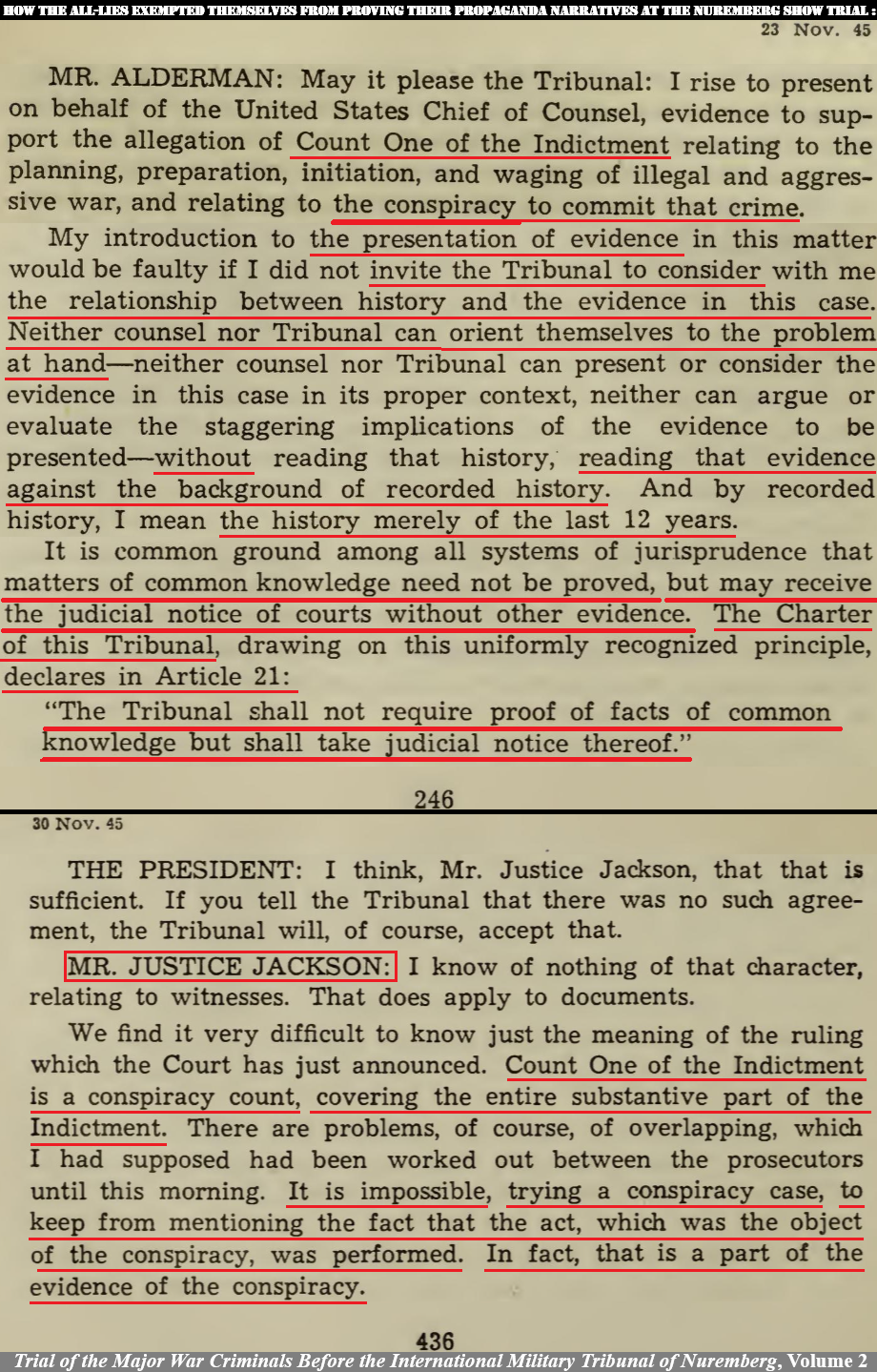
Judicial notice
Judicial notice is a rule in the law of evidence that allows a fact to be introduced into evidence if the truth of that fact is so notorious or well-known, or so authoritatively attested, that it cannot reasonably be doubted.
In the 1981 case of Mel Mermelstein v. Institute for Historical Review, the Superior Court of Los Angeles County took judicial notice of the fact that Jews were gassed to death at the Auschwitz Concentration Camp in 1944.[8]
https://en.wikipedia.org/wiki/Judicial_notice
Mel Mermelstein
Melvin Mermelstein (born Moric Mermelstein; September 25, 1926 – January 28, 2022) was a Czechoslovak-born American Holocaust survivor and autobiographer.
He is best known for his litigation with the Institute for Historical Review over evidence of gas chambers in German concentration camps during World War II. The legal dispute was resolved in Mermelstein's favor, without the court giving an opinion on the merits of the dispute, since it ruled that the existence of gas chambers at Auschwitz is a legally indisputable fact.[1]
In 1980, the Institute for Historical Review (IHR) promised a $50,000 reward to anyone who could prove that Jews were gassed at Auschwitz.[5] Mermelstein wrote a letter to the editors of the Los Angeles Times and others, including The Jerusalem Post. The Institute for Historical Review wrote back, offering him $50,000 for proof that Jews were, in fact, gassed in the gas chambers at Auschwitz. Mermelstein, in turn, submitted a notarized account of his internment at Auschwitz and how in 1944 he witnessed Nazi guards ushering his mother and two sisters and others towards (as he learned later) gas chamber number five.[5]
The IHR refused to pay the reward, stating that Mermelstein's notarized account was "not sufficient proof". Represented by public interest attorney William John Cox, Mermelstein subsequently sued the IHR in the Superior Court of Los Angeles County for breach of contract, anticipatory repudiation, libel, injurious denial of established fact, intentional infliction of emotional distress, and declaratory relief (see case no. C 356 542). On October 9, 1981, both parties in the Mermelstein case filed motions for summary judgment in consideration of which Judge Thomas T. Johnson of the Superior Court of Los Angeles County took "judicial notice of the fact that Jews were gassed to death at the Auschwitz Concentration Camp in Poland during the summer of 1944",[1][6] judicial notice meaning that the court treated the gas chambers as common knowledge, and therefore did not require evidence that the gas chambers existed. The judgment required IHR and other defendants to pay $90,000 to Mermelstein and to issue a letter of apology to "Mr. Mel Mermelstein, a survivor of Auschwitz-Birkenau and Buchenwald, and all other survivors of Auschwitz" for "pain, anguish and suffering" caused to them.[6][5]
In a pre-trial determination, Judge Thomas T. Johnson declared:
https://en.wikipedia.org/wiki/Mel_MermelsteinThis court does take judicial notice of the fact that Jews were gassed to death at Auschwitz Concentration Camp in Poland during the summer of 1944. It is not reasonably subject to dispute. And it is capable of immediate and accurate determination by resort to sources of reasonably indisputable accuracy. It is simply a fact.[6]