The witness Morgen resumed the stand.]
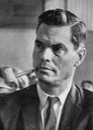
HERR PELCKMANN: Witness, I have two pictures to show to you. This has nothing to do with your examination concerning the concentration camps.
[Turning to the President.] They are the same pictures, Your Lordship, which I showed to the witness Eizenberg yesterday. They have now received an exhibit number from me, Exhibit Number SS-2 and Exhibit Number SS-3. As I said yesterday, they are taken from the book, written in Polish, which the Prosecution submitted a few days ago, on Pages IX and XI.
[Turning to the witness]: What is the rank of this SS man, Witness?
MORGEN: That cannot be an SS man. He is not wearing an SS uniform. I never saw such a uniform. On the left arm, the man wears the insignia of the Police and the Police shoulder patch.
HERR PELCKMANN: That is enough, Witness. I shall show you the second photograph. Please answer the question just as briefly.
MORGEN: That is not an SS uniform either, but a fancy uniform.
HERR PELCKMANN: Thank you, Witness. Yesterday you had already begun the description of the so-called extermination camps and the system of the extermination camps, but I should like to go back to conditions in the concentration camps which are to be distinguished from the so-called extermination camps.
You had given a description of the outward impression given by these camps which was extraordinarily pleasing. In order not to give any false impression, will you please describe in general the negative observations which you made.
. MORGEN: I was asked whether from my impressions of the concentration camps I gained the idea that they were extermination
496
8 Aug. 46
camps. I had to say that I could not get this impression. I did not mean to say that the concentration camps were sanatoria) or a paradise for the prisoners. If they had been that, my investigations would have been senseless.
Through these investigations I gained insight into the extremely dark and dismal side of the concentration camps. The concentration camps were establishments which, to put it mildly, were bound to give rise to crimes as a result of the application of a false principle. When I say the principle was at fault, I mean the following: The prisoner was sent to the concentration camp through the Reich Security Main Office. A political agency decided about his freedom, and its decision was final. Thereby the prisoner was deprived of all legal rights. Once in the concentration camp, it was almost impossible to regain freedom, although at regular intervals the cases were reviewed. The procedure was so complicated that, aside from exceptional instances, the great majority could have no hope. The camp, the Reich Security Main Office, and the agency which had assigned the individual to the camp, had to agree to his release. Only if these three, agencies reached an agreement could a release be effected. Thereby, not only the reason for the arrest was taken into consideration, but through a monstrous order of SS Obergruppenfuehrer Pohl the production side was also important. If a prisoner was needed in the camp because he was a good man, even though all conditions for release existed, he could not be released.
The concentration camps were surrounded by a sphere of secrecy. The, prisoner was not allowed any free contact with the public.
MR. DODD: Mr. President, we do not have the first responsibility, of course, for this defense. But I have discussed with Mr. Elwyn Jones my objection, he has it in here, and he finds no fault with it. It seems to me that what we are hearing here is a lecture on the Prosecution's case, and I do not see how it in any sense can be said to be a defense of the SS.
THE PRESIDENT: Dr. Pelckmann, the Tribunal thinks that the latter part of the evidence does not have much bearing on the case of the SS. They think it would be better that you should get on with the case for the SS.
HERR PELCKMANN: The charge against the SS is essentially based on the assertion that the SS as a whole is responsible for the concentration camps.
I am endeavoring to explain to the Tribunal the concentration camp organization from the very beginning, including all those questions which have not yet been explained either by the Prosecution or the witnesses, in order to find out the absolute truth. And I believe that it is necessary for the Tribunal to know this truth in
497
8 Aug. 46
order to be able to judge whether the charge of the Prosecution that the SS as a whole is responsible for the atrocities and the mass exterminations in the concentration camps or in the extermination camps is justified. I assert ...
THE PRESIDENT: Kindly go on with your case, Dr. Pelckmann. Will you kindly go on and make it as short as you can upon these matters which seem to be rather remote.
HERR PELCKMANN: From all the testimony of witnesses which I submit here on this point, it will be shown that the concentration camp organization was an entity.
THE PRESIDENT: Go on with your case. You are to go on with your case, and not argue with me.
HERR PELCKMANN: Witness, what were the further negative observations which you made? Please be brief on this point as the Court wishes.
MORGEN: The prisoner could not contact the public freely, and so his observations were not made known to the public. By this isolation in the concentration camp he was practically under the sway of the camp. This meant that he had to fear that at any time crimes could be committed against him. I did not have the impression from these facts that their purpose was to produce a system of crimes; but, of necessity, individual crimes were bound to result from these conditions.
HERR PELCKMANN: Witness, the events and the atrocities and the mass exterminations in the concentration camps are precisely what was charged against the SS. Please describe how these crimes are to be classified in three categories, and what these crimes have to do with the total planning of the SS. According to your information, I distinguish between atrocities caused by conditions beyond control, atrocities caused by supreme orders, and atrocities caused by individual criminal acts.
MORGEN: To a great extent the horrible conditions at times prevailing in some concentration camps did not arise from deliberate planning, but developed from circumstances which in my opinion must be called force majeure, that is to say, evils for which the local camp leaders were not responsible. I am thinking of the outbreak of epidemics. At irregular intervals many concentration camps were visited by typhoid fever, typhus, and other sicknesses caused especially by the arrival of prisoners from the Eastern areas in the concentration camps. Although everything humanly possible was done to prevent these epidemics and to combat them, the death rate which resulted was extremely high. Another evil which may be considered as force majeure was the fluctuating numbers of new
498
8 Aug. 46
arrivals and the insufficient billets. Many camps were overcrowded. The prisoners arrived in a weakened condition because, due to air raids, the transports were under way longer than expected. Towards the end of the war, there was a general collapse of the transportation system. Supplies could not be carried Gut to the necessary extent; chemical and pharmaceutical factories had been systematically bombed, and all the necessary medicines we ' re lacking. To top all, the evacuations from the East further burdened the camps and crowded them in an unbearable manner.
HERR PELCKMA.NN: That is enough on this point. Will you go on to the second point, the supreme orders?
MORGEN: As supreme orders I consider the mass extermination of human beings which has already been described, not in the concentration camps but in separate extermination places. There were also execution orders of the Reich Security Main Office against individuals and groups of persons.,,
The third point deals with the majority of individual crimes of which I said ...
THE PRESIDENT: Which is the witness talking about when he talks about extermination camps? Which are you talking about? Which do you call extermination camps?
HERR PELCKMANN: Please answer the question, Witness.
MORGEN: By extermination camps I mean those which were established exclusively for the extermination of human beings with the use of technical means, such as gas.
THE PRESIDENT: Which were they?
MORGEN: Yesterday I described the four camps of the Kriminalkommissar Wirth and referred to the Camp Auschwitz. By "Extermination Camp Auschwitz" I did not mean the concentration camp. It did not exist there. I meant a separate extermination camp near Auschwitz, called "Monowitz."
THE PRESIDENT: What were the other ones?
MORGEN: I do not know of any other extermination camps.
HERR PELCKMANN: You were speaking of atrocities on the basis of individual acts of a criminal nature. Please continue.
MORGEN: One must distinguish between the types of perpetrators. There were even killings of one prisoner by another, for example, because of revenge. If a prisoner had escaped, then during the search, because one did not know where the prisoner was hiding-perhaps in the camp itself-the whole camp had to line up on the parade grounds. That often lasted for hours and sometimes a whole day. The prisoners were tired and hungry, and the long wait, standing sometimes in the cold or rain, excited them
499
8 Aug. 46
very much, so that when the prisoner was recaptured, the other prisoners, out of revenge for his having brought this upon them, beat him to death when the opportunity presented itself.
There were many cases in which prisoners who had the impression that one among them was a spy, attempted to kill this prisoner in self-defense. There were cases where individual prisoners, due to physical weakness, could not keep pace with the others as regards work and who, on top of it, aroused the disgust of the other prisoners by bad behavior, for instance, by stealing bread or similar acts. If one considers that a large part of the prisoners were professional criminals who had already been sentenced before, it seems plausible that these people killed such fellow prisoners. This was done in many ways.
HERR PELCKMANN: You need not explain that at the moment, we will come back to it later. But will you describe another type of perpetrator?
MORGEN: Now I come to killings committed by members of the camp against prisoners and by prisoners against fellow prisoners. To give a specific example I should like to describe the case of the commander of the Concentration Camp Buchenwald, Koch, who was legally tried and executed. The following individual case happened. A prisoner who was an old Party member was sent to the Concentration Camp Buchenwald. As one of the old guard he had obtained a job as Kurdirektor. He misused this position to force Polish household employees under threat of dismissal to commit perverted actions with him, although he himself was very syphilitic. This man was sentenced to a long term of penal servitude by a regular court and after that sent to the concentration camp. Koch found his files, considered the sentence an error, and thinking himself authorized to correct this error of justice, had the prisoner put to death.
Another case of an entirely different sort is the following: Koch believed that a certain little Jewish prisoner, who had marked physical peculiarities, was following him to his various offices in the various camps. In superstitious fear of bad luck, he one day gave instructions to have this prisoner killed.
Another case: Koch believed that his criminal activity, or certain personal relationships, were known to some prisoners. In order to protect himself, he had them killed.
HERR PELCKMANN: How were these killings made possible, and how could the other inmates of the camp know about them?
MORGEN: The procedure was very simple. The prisoners in question were called, without being given reasons, and had to report at the gate of the camp. That was nothing striking, because almost every hour prisoners were picked up there for questioning,
500
8 Aug. 46
for removal to other camps, and so forth. These prisoners, without the other prisoners becoming aware of it, came to the so-called Kommandantur prison, which was outside the camp. There they were held for a few days, often one or two weeks, and then the jailer had them killed, mostly in the form of a sham inoculation; actually, they were given an injection of phenol into the arteries.
Another possibility of secret killing was the occasional transfer to the hospital. The doctor simply stated that a man needed treatment. He brings him in and after some time he puts him into a single room and kills him there. In all these cases the record showed that the prisoner in question had died of such and such a normal illness.
Another case: The prisoner was assigned to a detail of hard work, generally the so-called "quarry detail." The Kapo. of this detail is given a hint and makes the life of the prisoner more and more unbearable by making him work incessantly and vexing him in every respect. Then the day arrives when the prisoner loses patience and in order to escape, this torture, breaks through the. cordon of sentries, whereupon the guard, whether he wants to or not, has to shoot him.
These different forms of killing varied from case to case. By that very fact they were outwardly, unrecognizable, because they took place in secret places by various methods at various times. This presupposed that the commander who did this, like Koch here, relied on certain men who were absolutely devoted to him and who had key positions, such as the doctor here, who was arrested, the overseer, who was also arrested-and who committed suicide right after-and upon the aid of Kapos who were devoted to him and who co-operated with him. Where this co-operation was not possible, such excesses and crimes could not occur.
HERR PELCKMANN: Did you find such! cases and such camps?
MORGEN: Yes. I have already mentioned the result of our investigations. Since the majority of the camps was set up during the war with new personnel and in the old camps the personnel in key positions was replaced by new people, this co-operation could no longer take place.
HERR PELCKMANN: Would it be wrong to assume that all camps and all camp commanders and all camp doctors acted in the way you have just described?
MORGEN: According to my exhaustive investigations, I can only say that this assumption would be completely wrong. I really met commanders who did everything humanly possible for their prisoners. . I met doctors whose every effort was to help sick prisoners and to prevent further sickness.
501
8 Aug. 46
HERR PELCKMANN: We will go back to the mass exterminations, one case of which you described. You spoke of Kriminalkommissar Wirth, who was not a member of the SS and whose staff did not consist of SS men. Why was Wirth given the assignment?
MORGEN: I have already mentioned that Wirth was Kriminalkommissar with the Criminal Police in Stuttgart. He was Kommissar for the investigation of capital crimes, particularly murder. He had quite a reputation in discovering clues, and before the seizure of power lie became known to the general public for unscrupulous methods of investigation which even led to a discussion in the Wurttemberg Landtag (Diet). This man was now used in order to cover up the traces of these mass killings. It was thought that on the basis of his previous professional experience this man was unscrupulous enough to do this job, and that was true.
HERR PELCKMANN: You mentioned the Jewish prisoners who aided in the killings. What became of these people?
MORGEN: Wirth told me that at the end of the actions he would have these prisoners shot and in doing so, would despoil them of the profits which he had allowed them to make. He did not do this all at once, but by means of, the deceptive methods already described he lured and segregated the prisoners and then killed them individually.
HERR PELCKMANN: Did you hear from Wirth the name Hoess?
MORGEN: Yes. Wirth called him his untalented disciple.
HERR PELCKMANN: Why?
MORGEN: In contrast to Wirth, Hoess used in principle entirely different methods. I would best describe them when we come to the subject of Auschwitz.
HERR PELCKMANN: Was the name Eichmann mentioned at that time?
MORGEN: I cannot remember that the name Eichmann was mentioned at that time, but later I heard of it, too.
HERR PELCKMANN: How did you come on the trail which led to Auschwitz?
MORGEN: I got a clue by a remark of Wirth himself. Now I had only to find a reason to institute investigations in Auschwitz itself. I beg to bear in mind that my assignment was limited; I had to investigate crimes of corruption and crimes committed in connection with them.
THE PRESIDENT: Dr. Pelckmann, didn't he explain how he came to investigate Auschwitz yesterday?
HERR PELCKMANN: No, it was something entirely different, Your Lordship.
502
8 Aug. 46



 )
)