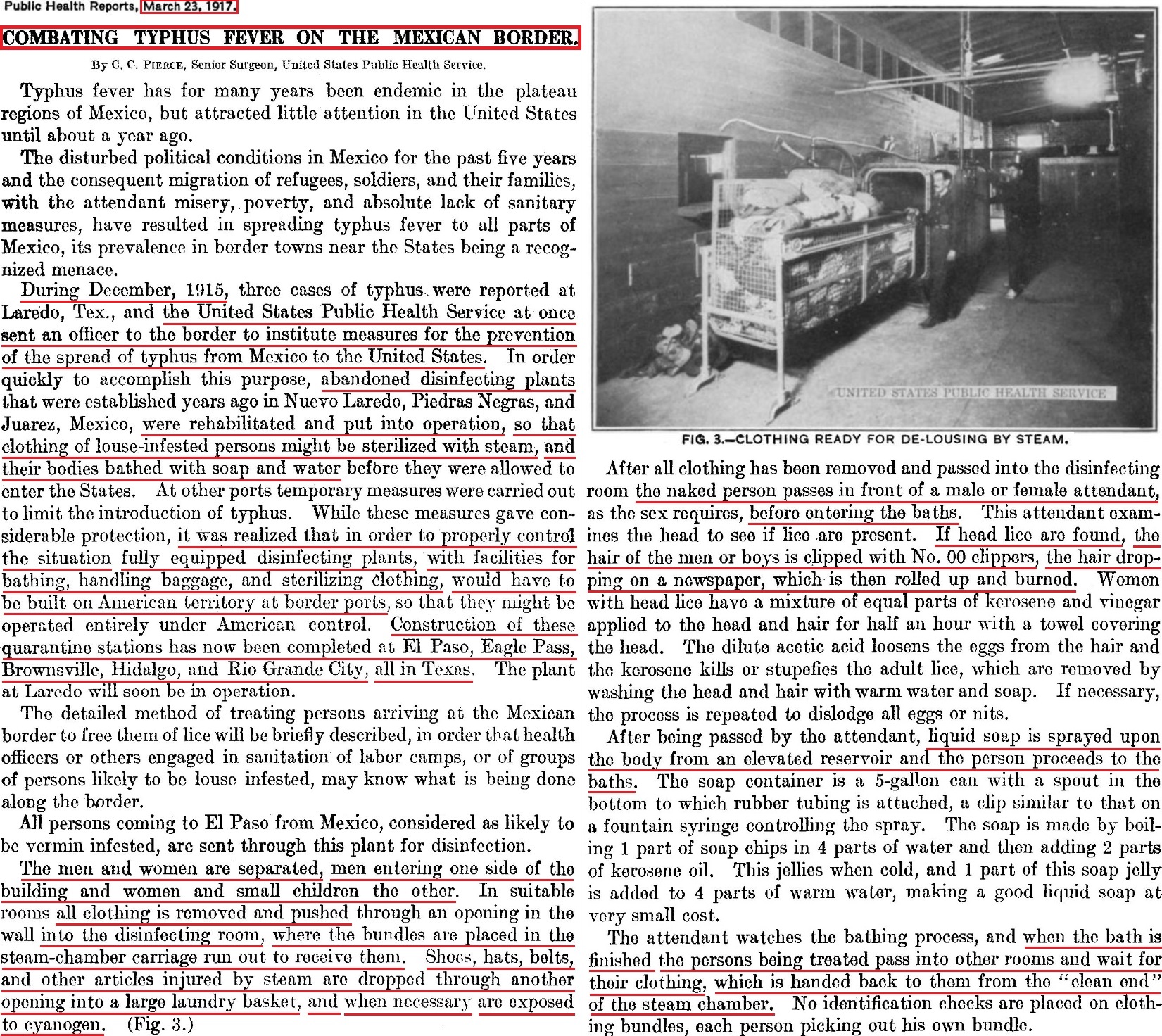
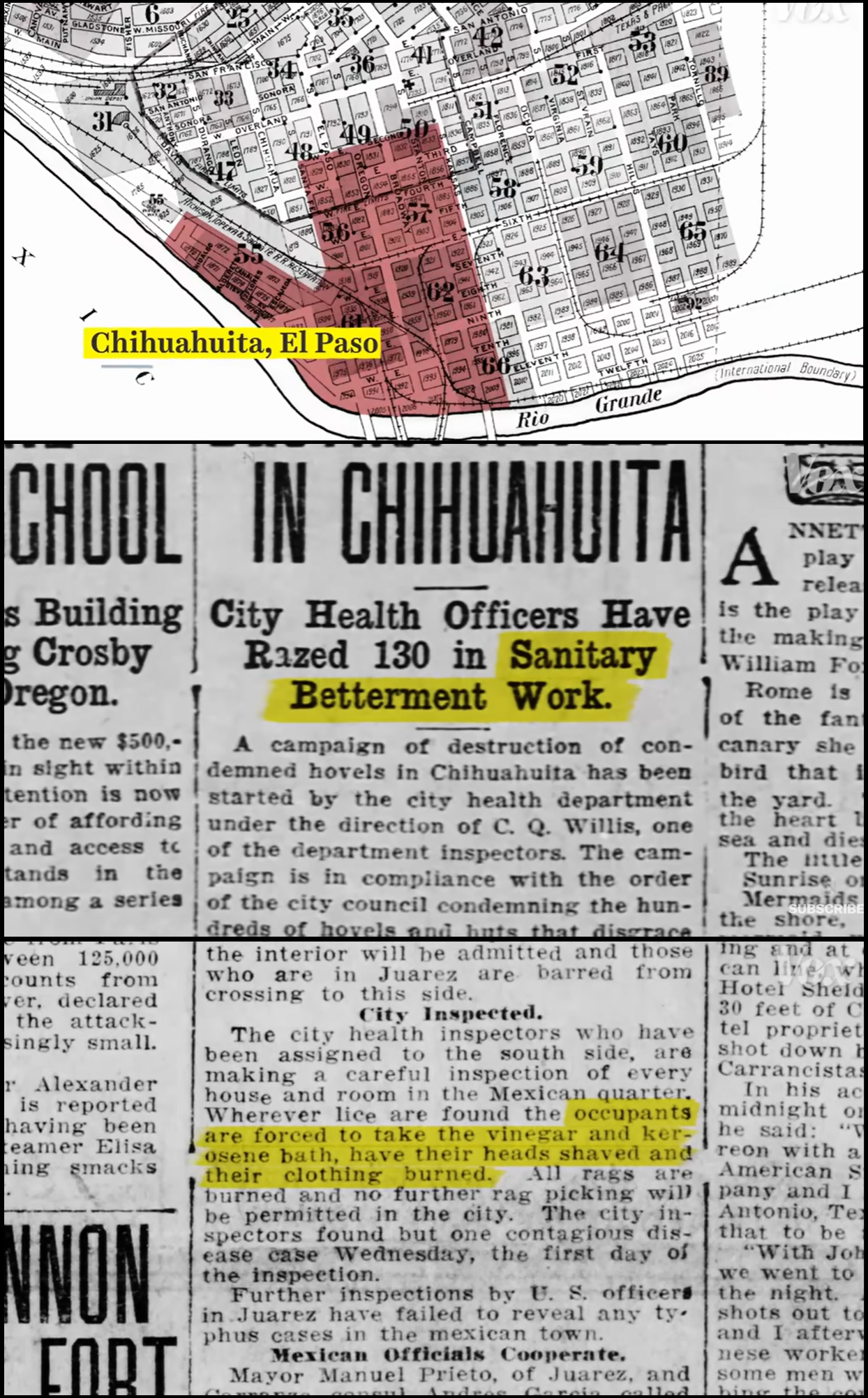
List and Details on Delousing Facilities

A revisionist safe space
Post Reply
W
Wetzelrad
Posts: 679
Joined: Wed Feb 26, 2025 6:35 am

List and Details on Delousing Facilities

Post by Wetzelrad »

I am starting this thread to share examples of delousing operations. I begin with those which are uncontroversial, but I might later move to those which are alleged to be sites of mass murder.

Since delousing often includes showering, some photos and videos could include nudity. Viewer discretion.

Disinfection Train
Spoiler
In 1942 the Germans produced a long film on typhus titled Kampf dem Flickfieber!, now hosted on USHMM. On reel 2, starting from timestamp 00:49, it shows the operation of an Entseuchungszug, a disinfection train. After an on-camera demonstration, it also shows an animated diagram, which (collaged and cleaned up) looks like this:

diagram of disinfection train from 1942 video on typhus, built by Reichsbahn-Ausbesserungswerk Potsdam, delousing, plan.jpg
diagram of disinfection train from 1942 video on typhus, built by Reichsbahn-Ausbesserungswerk Potsdam, delousing, plan.jpg (345.35 KiB) Viewed 146 times

Diagram labels include:

Code: Select all

Unreine Seite		Unclean side
Reine Seite		Clean side
Auskleideraum		Undressing room
Kleiderabgabe		Clothing drop-off
Desinfektionsgerät	Disinfection device
Frisörraum		Hairdressing room
Einseifraum		Lathering room
Brauseraum		Shower room
Trockengang		Drying hallway
Wartezeit 1/2 Std.	Waiting time: 1/2 hour
Erbauer Reichsbahn-Ausbesserungswerk Potsdam // Built by the Railway Repair Works in Potsdam
We see in the footage that the persons being disinfected are German soldiers. They are made to disrobe, turn in their clothing, proceed through a haircut and shower, wait for one half hour in private cabins, and re-robe before disembarking. The procedure looks familiar -- that is, similar to other delousing procedures we will look at -- even though the shape of a train makes the path of travel unintuitive.

One individual whose hair is not shorn is given Cuprex to apply. Cuprex seems to be an American-made anti-lice insecticide lotion.

The operators wear an outer layer of protective clothing which covers everything but their faces.

I am unable to identify the disinfection device on the train, but it resembles a two-sided steam autoclave. The uniforms are put on hooks and hanged inside the chamber.
Auschwitz-Birkenau BW 5a and 5b
Spoiler
Built right next to the Birkenau train ramp, buildings 5a and 5b were designed expressly for delousing (as "Entlausungsbaracke"). They are mirror images of each other. Four blueprints of 5a can be found in Pressac's book, Auschwitz: Technique and Operation of the Gas Chambers, starting from page 55. The most readable of these is this one:

blueprint of BW 5a, Birkenau, 1942.jpg
blueprint of BW 5a, Birkenau, 1942.jpg (111.43 KiB) Viewed 146 times

From left to right, the labels follow the path of travel:

Code: Select all

Windfang		Windbreak
Aborte			Toilets
Unreine Seite		Unclean side
Auskleide Raum		Undressing room
Wasch u. Brauseraum	Wash and shower room
Vorraum			Vestibule
Schleuse		Airlock
Gaskammer		Gas chamber
Reine Seite		Clean side
Ankleide Raum		Dressing room
Pumpenraum		Pump room
The gas chambers in both of these buildings have Iron Blue stains from Zyklon usage. Later work converted part of this space for "hot-air disinfection" using a Hochheim Company device. A third form of delousing was installed in the form of a "steam-disinfection device" from the Eugen Werner Company. See The Real Auschwitz Chronicle for details, especially p.214.

Photos of these buildings are plentiful in The Chemistry of Auschwitz. The clothing was presumably put on clothing racks of some fashion, though I can't find an image of what those looked like.

According to camp documents, some 22 "gas doors" or "gas-tight doors" were equipped to these buildings (Special Treatment in Auschwitz, pp.48-49). Also notable is that these doors were to be manufactured "exactly like the doors for special t. of the J.", no doubt referring to the doors of the Zentralsauna, which was the "Delousing facility for special treatment".
Auschwitz-Birkenau Zentralsauna
Spoiler
The Zentralsauna or Central Sauna stands between Crematoria III and IV. In documents it was referred to by formal names like "Disinfection and disinfestation facility" ("Desinfektions- und Entwesungsanlage") or "Delousing facility for special treatment" (see Special Treatment in Auschwitz, p.40).

Pressac discusses the Zentralsauna with numerous photos and plans in Auschwitz: Technique and Operation of the Gas Chambers from pages 65 to 85. The most accurate floorplan is the one on page 72, but the Auschwitz Museum's equivalent plan is faithful enough and easier to read.

Image

Prisoners to be treated would enter at the upper right (literally marked "Zugang" or "entrance" in the original), follow a U-shaped pathway, showering at the bottom while their clothes went to disinfection at the center of the building, and ultimately exit at the upper left ("Abgang"). Not to be overlooked are all the rooms that have direct equivalents in the crematoria, especially the doctor's room ("Artzt") and examination room ("Untersuchungs-Raum"). There was also a valuables room ("Wertsachen") noted on at least one draft plan and in the handover protocol (The Real Auschwitz Chronicle, p.387).

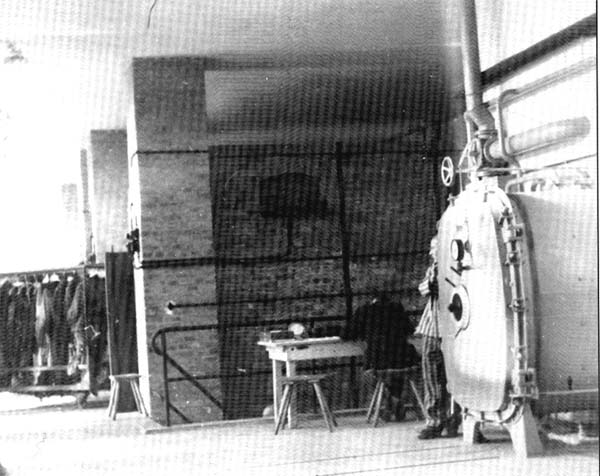
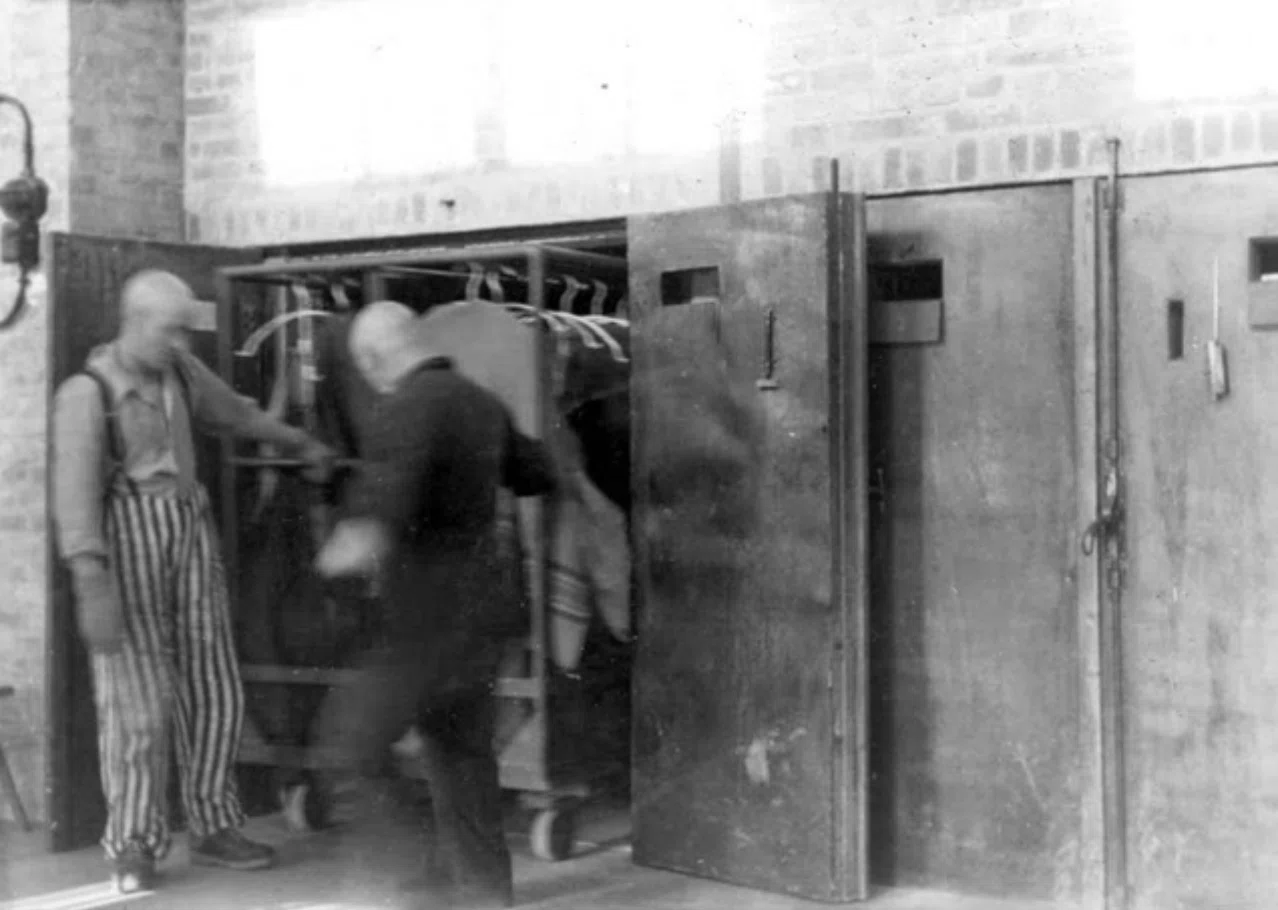
The Zentralsauna was equipped with "3 disinfestation ovens" installed by a Munich-based company called Goedecker (Les Crématoires d'Auschwitz, caption for document 24) and "4 disinfestation hot-air chambers" from Topf & Söhne. The Germans took some action shots of them while in operation:
https://lekcja.auschwitz.org/praca_en/i ... 2b3c92.jpg
https://www.historiography-project.com/ ... 083-01.jpg
https://assets.st-note.com/img/17741082 ... CGn4qV.png

According to Germar Rudolf, two of the Topf devices may have come from a project originally planned for Crematorium II (The Chemistry of Auschwitz, pp.121,122).

One oddity about the Zentralsauna is that it's singular, lacking an identical or split facility to keep men apart from women.
Majdanek Bathhouse Barracks 41 and 42
Spoiler
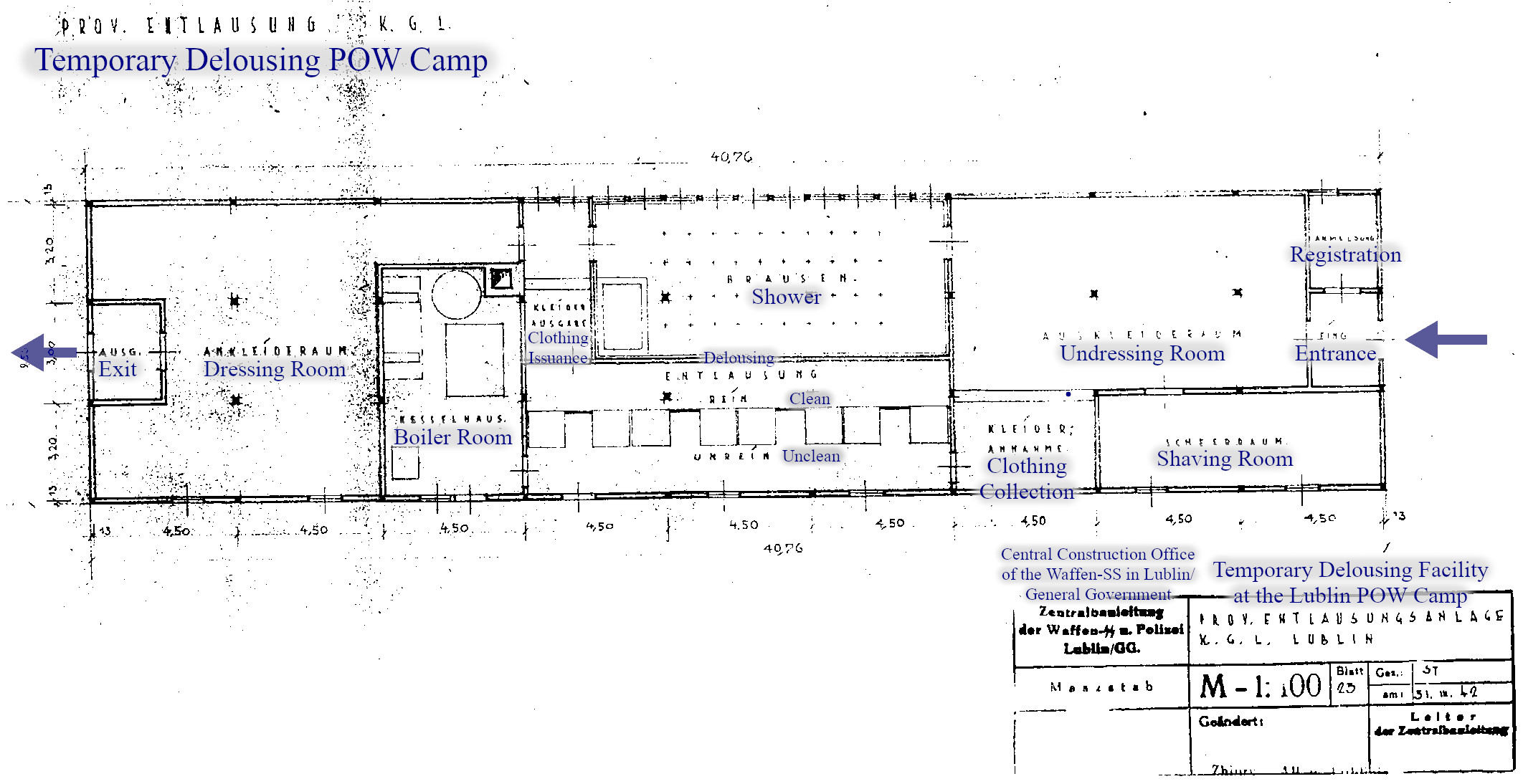
It is probably more than coincidence that at the same time the Zentralsauna was being planned and built in Birkenau (construction beginning on April 30, 1942), a very similar facility was in the works at Majdanek. A plan for an "Entlausungsanlage", drawn on March 30, 1942, accurately depicts what later became Barrack 42, the women's bathhouse, which is the place women supposedly passed through on their way to the "gas chamber" bunker stationed just behind it.
Image

A major flaw in the "gas chamber" theory is that the plan shows the intended path of travel takes the prisoner delousees away from the bunker. This is proven by the room labels, which include the entrance ("Eingang"), undressing room ("Auskleideraum"), clothing drop-off ("Kleiderannahme"), etc. That is, the plan had delousees travel from north-to-south instead of from south-to-north (as the Soviets, the witnesses, and the Majdanek Museum all claimed, e.g. see this magazine they produced, page 17).

Barrack 42 has four small delousing chambers. I'm unable to find any information on how these worked. All the chambers have wooden doors in a style similar to Auschwitz's gas-tight doors.

Barrack 42 is the approximate mirror image of its neighbor Barrack 41, the men's bathhouse. The two notable differences in B41 are: the absence of those four delousing chambers, leaving more space for showers; and the conversion of the undressing room to perform clothing delousings. We know that in the undressing room Zyklon B was used because of the tell-tale Iron Blue stains on the walls and ceiling. However, these Zyklon gassings would be slow, probably requiring an overnight wait to air out, and this would inconveniently block off a large part of the building. For this reason, I say probably that delousing gassings were only conducted between transports, and incoming prisoners were issued fresh clothes which could easily be stored in the sizable dressing room. With those assumptions, B41 and B42 operated very similarly.

Until as recently as 2008, the Majdanek Museum claimed B41's undressing room (which it insists is a "dressing room") hosted a homicidal "gas chamber", but it has since dropped this claim (Source). It still claims B41 was the site of selections for gassing and for travel toward the "gas chamber" bunker.

B41's undressing room also has wooden doors made gas-tight plus two chimneys added for ventilation. The way the latter are described in documents, i.e. "Brick construction of two chimneys in the gas chamber", could be interpreted as criminal traces if a person was looking for any here (Concentration Camp Majdanek, p.133).
Majdanek Old Crematorium
Spoiler
This building, the only one still standing between Fields I and II, is very poorly documented. From my best attempts at research, it was a crematorium equipped with two cremation ovens, but according to the Soviets and some witnesses, it was also used for homicidal gassings, delousing gassings, and/or laundry drying. The Majdanek Museum now rejects the story of homicidal gassings here (Source).

This facility is fundamentally different than others on this list because, as far as anyone knows, it didn't include showers and was not referred to in documents as a delousing facility. I include it here because it demonstrates the banality of having gas chambers in a crematoria.
Mauthausen Laundry Building
Spoiler
Mauthausen's laundry block is adjacent to the main entrance and the prisoners' barracks. The basement floor of the laundry is nothing more than a giant shower room and a steam autoclave. A wall bisects the space around the autoclave, splitting it into a clean room and unclean room.

This location is best seen in tourist videos, like this one:


It hardly needs to be said, but the process here was: enter, drop off clothing near the autoclave, possibly get a haircut, shower, and put on clean clothing on the clean side. Exit was made through the same door they came in through.
User avatar
Eye of Zyclone
Posts: 462
Joined: Fri Apr 04, 2025 3:12 pm

Re: List and Details on Delousing Facilities

Post by Eye of Zyclone »

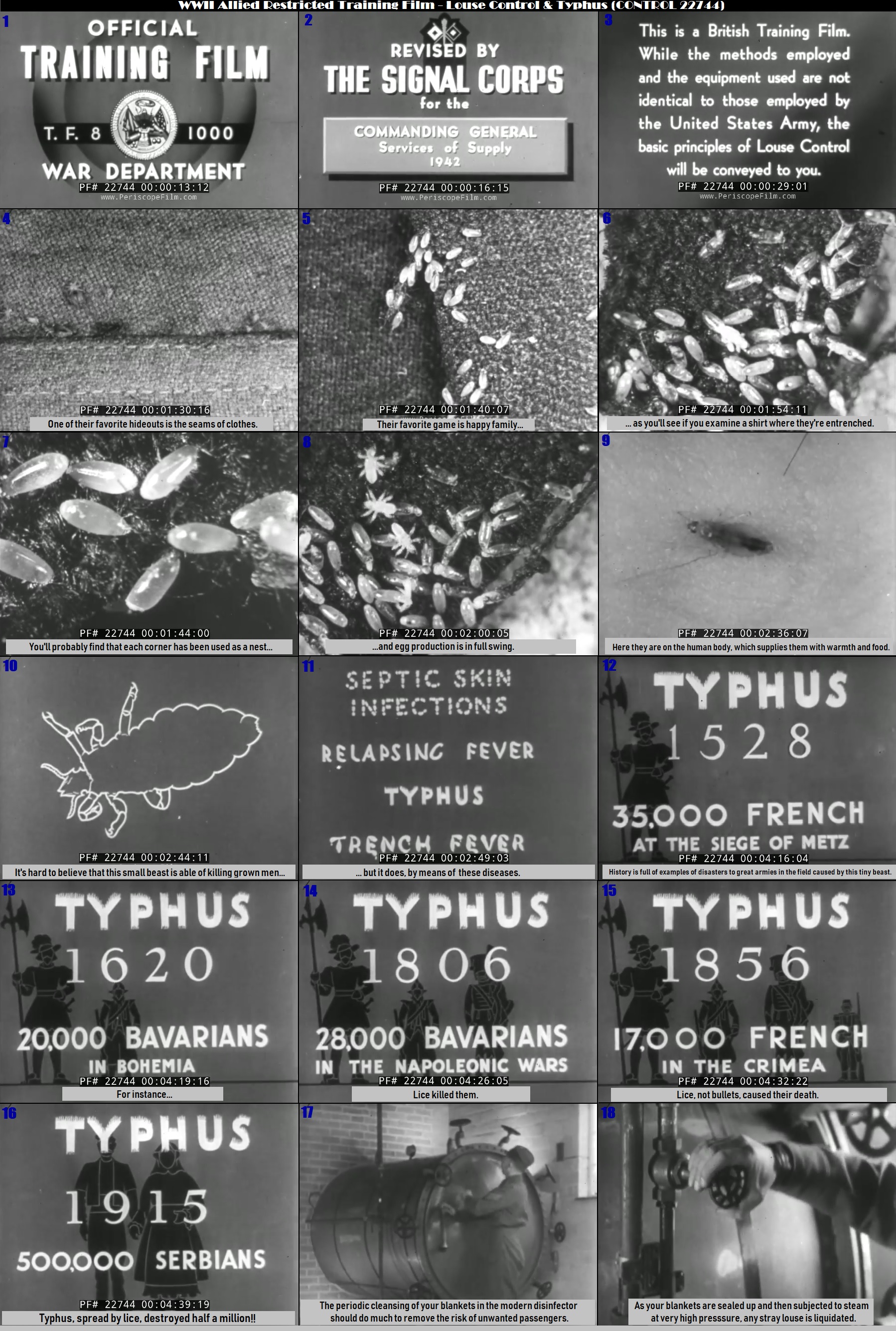
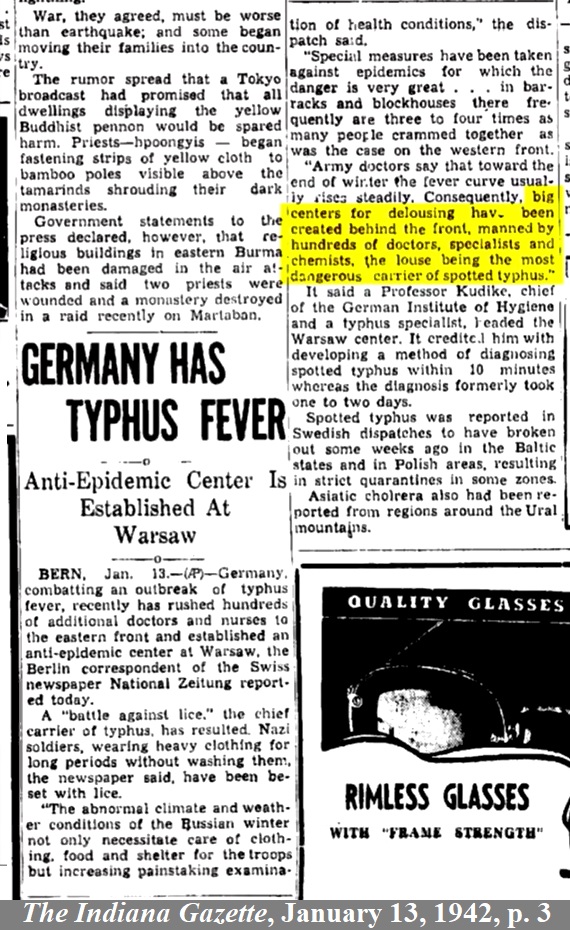
For the less informed readers, it might be helpful to explain that typhus is a disease that killed many people in Eastern Europe, especially during wars (also called "war fever"), that typhus is transmitted by lice, and that Zyklon B (cyanide gas in a can) was widely used to fumigate lice-infested clothes and beddings as part of the fight against typhus.

Image


Image
"Holocaust deniers are very slick people. They justify everything they say with facts and figures."
J
Joe Splink
Posts: 69
Joined: Thu Jan 02, 2025 4:23 pm

Re: List and Details on Delousing Facilities

Post by Joe Splink »

From van Pelt's book - 'Auschwitz: 1270 to the Present'
Image

There is additional text in the book about typhus at the camp .... but I cannot find an online copy.
I believe this building is still there, but not on the tour.
W
Wetzelrad
Posts: 679
Joined: Wed Feb 26, 2025 6:35 am

Re: List and Details on Delousing Facilities

Post by Wetzelrad »

Auschwitz Main Camp Reception Center
Spoiler
This building had the elaborate title of "Laundry and Reception Building with Delousing Installation and Prisoner Bath" ("Wäscherei- und Aufnahmegebäude mit Entlausungsanlage und Häftlingsbad"). Here we see again that Zyklon delousing gas chambers are paired up with showers and other non-homicidal facilities.

Pressac covers this building from page 31 forward, again with many photos and plans. One particularly valuable photo shows the canopy-style roof built over the delousing cells, still under construction:

inside reception center.jpg
inside reception center.jpg (67 KiB) Viewed 108 times

This design is reminiscient of the canopy roof built over Majdanek's "gas chamber" bunker. The exposure to open air would have been good for airing out clothing laden with HCN.

Something that differentiates this building is that it was intended to use Degesch-brand circulation devices. This would have made Zyklon gassings here much faster than those conducted in BW 5a and 5b and elsewhere. I will expand on this in the next section on Dachau.
Joe Splink wrote: Sun Jun 14, 2026 12:16 am From van Pelt's book - 'Auschwitz: 1270 to the Present'
Image
Van Pelt's rendering is helpful, in fact his book includes many high-quality plans, but he wrote overconfidently about things he didn't know. It turned out that the "nineteen Zyklon B delousing chambers" were never completed (see Germar Rudolf's Auschwitz: Technique and Operation of the Gas Chambers, An Introduction and Update to Jean-Claude Pressac’s Magnum Opus, p.25).

In 1944, eight of the incomplete delousing cells were converted instead for the usage of breakthrough microwave technology. A report by the physician Eduard Wirths informs us (same volume, pp.18-20):
The shortwave delousing device Osten 3 was taken into operation at Auschwitz on June 30, 1944. After training the so-far unskilled employees, full operations of the device started on July 5, 1944. [...] The device’s average daily performance was 1441 sets of clothing and 449 blankets or comforters, which amounts to 46,122 sets of laundry and 14,368 blankets or comforters within 32 business days. [...] The delousing device operates very swiftly and reliably, as many test runs have shown [...]
A plan for this conversion is titled "Installation of Shortwave Delousing Systems" ("Einbau der Kurzwellen-Entlausungsanlagen") (p.21).

Also mentioned in Wirth's report is usage of the chemical DDT under the name "Lauseto".
Joe Splink wrote: Sun Jun 14, 2026 12:16 am I believe this building is still there, but not on the tour.
Google Maps shows the outer shell of the building is basically intact, but extensively modified. According to Pressac the Museum gutted the gas chambers to use that space for storage.
Dachau Crematorium
Spoiler
Sometimes called "Barrack 'X'". This facility has on one end four small fumigation cells. In the immediate aftermath of the war, these cells were mistaken for homicidal gas chambers by U.S. reporters and the U.S. Army (Source, p.33).

In fact they were properly-designed Zyklon fumigation delousing chambers equipped with steel doors and with circulation devices built by the Degesch company, which was also the manufacturer of Zyklon. Here is a photo (from Mattogno) and drawing (reproduced in Rudolf's Auschwitz: Technique and Operation of the Gas Chambers, An Introduction and Update to Jean-Claude Pressac’s Magnum Opus, p.22).

Degesch circulation device for Zyklon-B fumigations includes remote can opener, heater, and ventilation fan, installed at Dachau.jpg
Degesch circulation device for Zyklon-B fumigations includes remote can opener, heater, and ventilation fan, installed at Dachau.jpg (251.09 KiB) Viewed 108 times

These devices opened and emptied the Zyklon B cans remotely, heated their contents for rapid release, circulated air to spread it evenly through the room, and ultimately extracted the gas and replaced it with fresh air. Documents say this process would take 70-75 minutes (The Real Case for Auschwitz, p.167). This is many times faster than fumigation with no device, which would usually require one to two days (Source).

The fumigation cells appear on the left side of this plan created by the Dachau Museum.

Image

Since the Museum admits that no one was gassed here, one is left to speculate about what all these extra rooms were for. I say here that this facility may have been built for prisoner delousing with a path like this:

7.5) Entrance.
7) Undressing. Shaving if needed.
5) Shower.
4) Dry off. Inspection if needed.
3) Dressing.
2) Exit.

There is some slight circuitousness to the path this leaves for the clothing, and the clean and dirty sides may overlap somewhere, but this is no more awkward than any other facility I've looked at. It seems totally plausible.

Naysayers could argue that the shower was not fit for showering, but to the best of my understanding the pipes that run above the ceiling were in fact equipped to supply and heat water to the shower heads (see The Dachau Gas Chamber, p.49). The shower room may have been converted to a different purpose at some later date, but since the historians are unable to reach a rational consensus on this point I will not attempt to comment.

Even if you reject showers here, it is still a notable example of a crematorium and delousing chamber combo.
p
pilgrimofdark
Posts: 460
Joined: Sat Aug 09, 2025 7:46 pm

Re: List and Details on Delousing Facilities

Post by pilgrimofdark »

Many Jews likely primarily encountered delousing/disinfection in the ghettos long before getting to a major camp complex. There are several accounts of such operations in the first volume of the Ringelblum Archive in English, Warsaw Ghetto: Everyday Life.

Jewish "disinfection brigades" were established by December 1940 in Warsaw. Jews went through a multi-week training/educational course on epidemiology, disinfection, first aid, etc.

The brigades came to a block or tenement house, sent people suffering from typhus to hospitals, sent the others to the baths, and used sulfur to disinfect belongings that were collected from various apartments and placed in a single room.

Some of the brigade members left reports commenting on the disinfection process and the reaction of regular Jews when their tenement houses were disinfected. (They often use the term "disinsection," which the book defines as "spraying to prevent the spread of insects.")
Almost each time I asked about the "steaming," people lamented that they were innocent victims of a doctor's error. Nobody at home had typhus, God forbid, it was just a touch of pneumonia, someone fell down the stairs and hit his head, or ate two hard-boiled eggs at once and upset his stomach, and now the whole house is in uproar.
[...]
The fact that a regular gas chamber did not guarantee complete disinsection was an open secret. I often heard tenants grumbling that the "gassing" gave no results.
[...]
Disinsection of a building can be broken down into four stages:
  • evacuating residents to the bath house
  • disinsection in the bath house
  • bringing belongings to gas chambers, and
  • disinsection in chambers
[...]
I knew that disinsection of objects contained in the chamber was not important, as most people would avoid a bath, and a very large proportion of bedding and other such items would be taken away or hidden, with or without my colleagues knowing.

- Document 28. ARG I 527 (Ring. I/268).
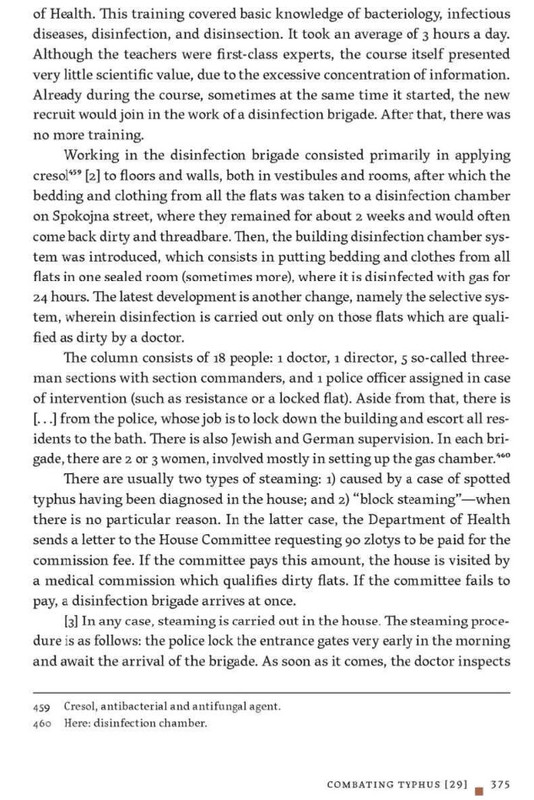
The below is from Document 29, ARG I 586 (Ring. I/250). It describes the older process and the newer (July 1941 or thereabouts) process of delousing belongings, as well as "steaming."
Spoiler
Image
The next document contains an account of a "mass-scale" disinfection on Krochmalna Street in September 1941:
At 5 o'clock in the morning, the German gendarmerie, the Polish police, and the [Jewish] Order Service closed Krochmalna Street between the cross-streets of Ciepla and Rynkowa. All residents were ordered to leave their flats. [...] People weere overcome with panic because they were convinced that they were to be deported; there were even rumours that everyone would be shot. One participant in the operation, Mr Sz., told me that he repeatedly assured the people that it was just a bathing operation -- nothing helped, though, for people were convinced that they were sentenced to death. [...] From time to time, a hundred or more people were sent to individual bathhouses. People were selected at random, whoever stood close by, men or women. By the evening, the organisers still had not managed to send everyone to the bath.
[...]
The entire operation was carried out in a very ruthless manner, thus marking one of the chapters in the martyrdom of the people of the Jewish district.
[...]
The only positive outcome of the operation was that all the corpses were cleared that day from Krochmalna Street, and all people infected with typhoid were taken to hospital.

- Document 30. ARG I 502 (Ring. I/291).
I haven't read through all of the documents on combating typhus yet, but will update with any relevant details on delousing operations in the Warsaw ghetto. Oyneg Shabes member Peretz Opoczynski also left a somewhat longer account that includes a description of the process in the bathhouse itself.

The overriding sentiment is that the bathhouses were not hygienic enough to disinfect the Jews, and the gassing wasn't powerful enough to kill the lice. Bribery of bathhouse attendants and disinfection brigades was rampant, so avoiding disinfection entirely was not uncommon, especially as time went on.
W
Wetzelrad
Posts: 679
Joined: Wed Feb 26, 2025 6:35 am

Re: List and Details on Delousing Facilities

Post by Wetzelrad »

pilgrimofdark wrote: Mon Jun 15, 2026 12:14 am Many Jews likely primarily encountered delousing/disinfection in the ghettos long before getting to a major camp complex.
That's interesting because I've barely heard about delousing in ghettoes. For example when I search through USHMM's archives for "delouse", the first ten oral interviews that come up all discuss delousing in a camp or post-liberation context. Nothing earlier than that. Maybe this is a result of questioner bias.
pilgrimofdark wrote: Mon Jun 15, 2026 12:14 am Jewish "disinfection brigades" were established by December 1940 in Warsaw. Jews went through a multi-week training/educational course on epidemiology, disinfection, first aid, etc.

The brigades came to a block or tenement house, sent people suffering from typhus to hospitals, sent the others to the baths, and used sulfur to disinfect belongings that were collected from various apartments and placed in a single room.
The Germans made what appears to be a training video of exactly this process. Said to be filmed in the Warsaw Ghetto in 1941.
Reel 1: https://collections.ushmm.org/search/catalog/irn1002482
Reel 2: https://collections.ushmm.org/search/catalog/irn1002483

In the first reel, we see the workers wearing Star of David armbands, especially visible at 02:49. Presumably this was a Jewish disinfection brigade.

At 03:20 they put bundles into a room that they're about to seal. At 03:29 they have chemical solids in a pan which they set a flame on. Is this sulfur?

At 03:57 they spray a chemical on a wall. Presumably this was the Cresol.

The second reel shows a bathhouse and steam autoclave in use.
pilgrimofdark wrote: Mon Jun 15, 2026 12:14 am
The fact that a regular gas chamber did not guarantee complete disinsection was an open secret.
What was the original language of "regular gas chamber" here, and at what date was it written? I only ask because Pressac and Van Pelt have contended that the usage of "Normalgaskammer" is a criminal trace.
pilgrimofdark wrote: Mon Jun 15, 2026 12:14 am
I knew that disinsection of objects contained in the chamber was not important, as most people would avoid a bath, and a very large proportion of bedding and other such items would be taken away or hidden, with or without my colleagues knowing.
pilgrimofdark wrote: Mon Jun 15, 2026 12:14 am The overriding sentiment is that the bathhouses were not hygienic enough to disinfect the Jews, and the gassing wasn't powerful enough to kill the lice. Bribery of bathhouse attendants and disinfection brigades was rampant, so avoiding disinfection entirely was not uncommon, especially as time went on.
Avoidance is one thing, actively hiding items that should be deloused is quite another. Perhaps this fits in my thread on the deliberate frustration of delousing efforts.
User avatar
Eye of Zyclone
Posts: 462
Joined: Fri Apr 04, 2025 3:12 pm

Re: List and Details on Delousing Facilities

Post by Eye of Zyclone »

Wetzelrad wrote: Mon Jun 15, 2026 2:31 am
pilgrimofdark wrote: Mon Jun 15, 2026 12:14 am Many Jews likely primarily encountered delousing/disinfection in the ghettos long before getting to a major camp complex.
That's interesting because I've barely heard about delousing in ghettoes. For example when I search through USHMM's archives for "delouse", the first ten oral interviews that come up all discuss delousing in a camp or post-liberation context. Nothing earlier than that. Maybe this is a result of questioner bias.
pilgrimofdark wrote: Mon Jun 15, 2026 12:14 am Jewish "disinfection brigades" were established by December 1940 in Warsaw. Jews went through a multi-week training/educational course on epidemiology, disinfection, first aid, etc.

The brigades came to a block or tenement house, sent people suffering from typhus to hospitals, sent the others to the baths, and used sulfur to disinfect belongings that were collected from various apartments and placed in a single room.
The Germans made what appears to be a training video of exactly this process. Said to be filmed in the Warsaw Ghetto in 1941.
Reel 1: https://collections.ushmm.org/search/catalog/irn1002482
Reel 2: https://collections.ushmm.org/search/catalog/irn1002483

In the first reel, we see the workers wearing Star of David armbands, especially visible at 02:49. Presumably this was a Jewish disinfection brigade.

At 03:20 they put bundles into a room that they're about to seal. At 03:29 they have chemical solids in a pan which they set a flame on. Is this sulfur?

At 03:57 they spray a chemical on a wall. Presumably this was the Cresol.
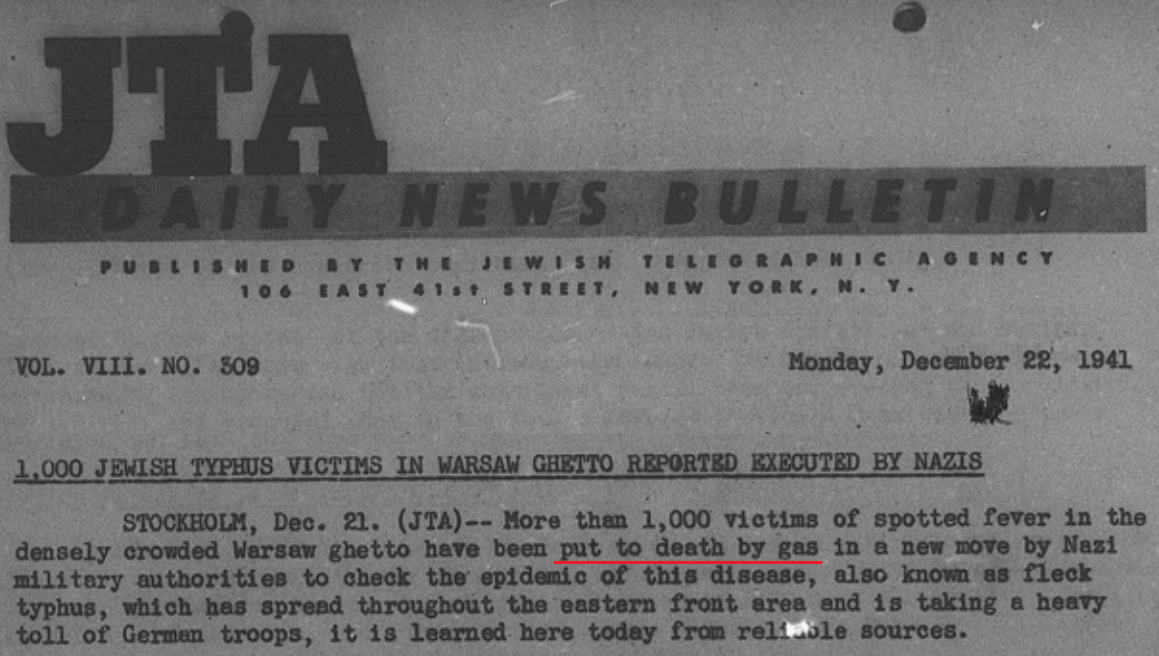
It didn't take long before some propagandists turned these delousing fumigations into homicidal gassings...

Image
"Holocaust deniers are very slick people. They justify everything they say with facts and figures."
p
pilgrimofdark
Posts: 460
Joined: Sat Aug 09, 2025 7:46 pm

Re: List and Details on Delousing Facilities

Post by pilgrimofdark »

Wetzelrad wrote: Mon Jun 15, 2026 2:31 am The Germans made what appears to be a training video of exactly this process. Said to be filmed in the Warsaw Ghetto in 1941.

At 03:20 they put bundles into a room that they're about to seal. At 03:29 they have chemical solids in a pan which they set a flame on. Is this sulfur?
Must be. The accounts mention a sulfur "candle," but I figured it was more technical than the popular connotation of that word. But use of a "dish with sulfur" is also described by a sulfur handler in the disinfection brigade. That video illustrates it nicely, even if it's probably staged for the camera.
Wetzelrad wrote: Mon Jun 15, 2026 2:31 am "The fact that a regular gas chamber did not guarantee complete disinsection was an open secret."

What was the original language of "regular gas chamber" here, and at what date was it written? I only ask because Pressac and Van Pelt have contended that the usage of "Normalgaskammer" is a criminal trace.
The date is listed as "1942" for this account. The original language is Polish. It came from the first collection of Ringelblum Archive documents, so has to be July 1942 or earlier. The training of the Polish/Jewish disinfection brigades was done by the German authorities, so it's likely German > Polish > English still results in "regular gas chamber."

Full title in the book: "1942, Warsaw, ghetto, Author unknown, account of the member of a sanitary brigade. Ineffectiveness of the brigades in the prevention of epidemic, lack of appropriate disinfectants, bribery"

That account also has a paragraph that tracks the video remarkably well:
The bedding is taken down, the chambers are sealed, disinfectants are sprayed, and gases set up -- and yet, there is no one to shout "this is a farce!" Not all the bedding goes into the chambers, nor is Lysol used; neither do people go take baths, nor is gas set up in chambers.
Thinking about it more, I'm not sure the extent of disinfection in other ghettos. It could have been done primarily in Warsaw, or just the larger ghettos in Poland and the east. So eastern Jews were more likely to encounter delousing operations/facilities in ghettos, but how much more likely could vary quite a bit.
W
Wetzelrad
Posts: 679
Joined: Wed Feb 26, 2025 6:35 am

Re: List and Details on Delousing Facilities

Post by Wetzelrad »

I've come across some other videos and materials that touch on disinfection in ghettos, but nothing of great substance.

Searching for info on sulfur, I came across the account of one Henry Bermanis. His story is non-credible for many reasons: he participated in all kinds of sabotage without being caught, he dug up an old skeleton and stood it up as a farce, he "destroyed graves" with quicklime, which is a physical impossibility, and he was given an "assignment of no return" which he returned from. His assignment was to "Stützpunkt", which according to the official histories was the Aktion 1005 unit that dug up and cremated graves in the area of Riga, but for some reason he used lime instead of fire. Also notable is that he mentioned the usage of woodburning producer gas trucks here, but not for gassing, just for travel.

Anyway, his description of delousing in this location is similar to the process used at Warsaw except for the sulfur being a powder. His words:
So, I became the delouser. I would take mattresses and clothing that were full of lice and fleas and stuff like that and bedbugs and put them in a chamber and use a bowl of sulfur powder with sawdust and set it on fire and then seal the thing up. The next day I would open it up and take the stuff out, shake out the dead beasties and do the next one.
If Bermanis's story is true, the combination of delousing clothes and disinfecting graves makes "Stützpunkt" sound like a hygienic operation.
p
pilgrimofdark
Posts: 460
Joined: Sat Aug 09, 2025 7:46 pm

Re: List and Details on Delousing Facilities

Post by pilgrimofdark »

Opoczynski's account of a disinfection operation in the Warsaw ghetto is included in the book In Those Nightmarish Days. I'm not sure if it's available online, and the description of the disinfection process is about 8 pages total.

He must be describing the first process, as he mentions bedding and items being bundled up and removed from a house to be disinfected. According to other accounts above, the gassing was later done at the tenement house/apartment building itself.

The main unique piece of information he shares is of barbers at the bathhouse. Hair and beards would be shaved off, followed by a medical inspection to make sure all areas were shaved. Only then would the Jews enter the bath, after waiting for the water to heat up enough.

It's described as a several-day process to get everyone to the baths and be allowed to return home. It could take weeks to get the disinfected bedding back.

Opoczynski reports the usual litany of horrors about the process: police mercilessly beating people, rampant theft of belongings, rampant bribery (mostly to avoid having to bathe). He doesn't mention anything about the gassing process itself, likely since it was done remotely at the time he wrote this account.

---

The other accounts in the Ringelblum Archive volume add a few details.

One document (#32) explicitly says that disinfection chambers were set up and the process carried out using sulfur candles, and the flats/staircases were disinfected with cresol.

Almost all of the accounts report the bribery to avoid disinfection/baths, and that the entire process was more likely to spread lice than kill them.

If a tenement house offered resistance, German disinfectors would be called in to mercilessly beat people in a process called "penal steaming" :!:

But one document (#34) is an account by a Dr. Akiba Uryson. Apparently, private doctors avoided reporting cases of typhus, as the community would shun him and it would damage his reputation. Thus, "block doctors" were assigned by the Department of Health to carry out inspections of individual houses. The author of the account refers to "sulfur chambers" and "sulfur candles," stressing the process didn't work and caused lice to spread as the sulfur didn't penetrate deeply enough into the bundles of bedding.

(I wish these books were still online. Luckily, I grabbed screenshots of all the pages of volumes 1 through 9. If there are any full accounts anyone wants, I can post them. Most are relatively short.)

---

Finally, (for now, more to come) Friedrich Berg's article "Typhus and the Jews" is still worth reading. It has some discussion on the delousing tunnels, but also covers the attitude of Jews and Poles regarding bathing and hygiene in general, both before and during the war.

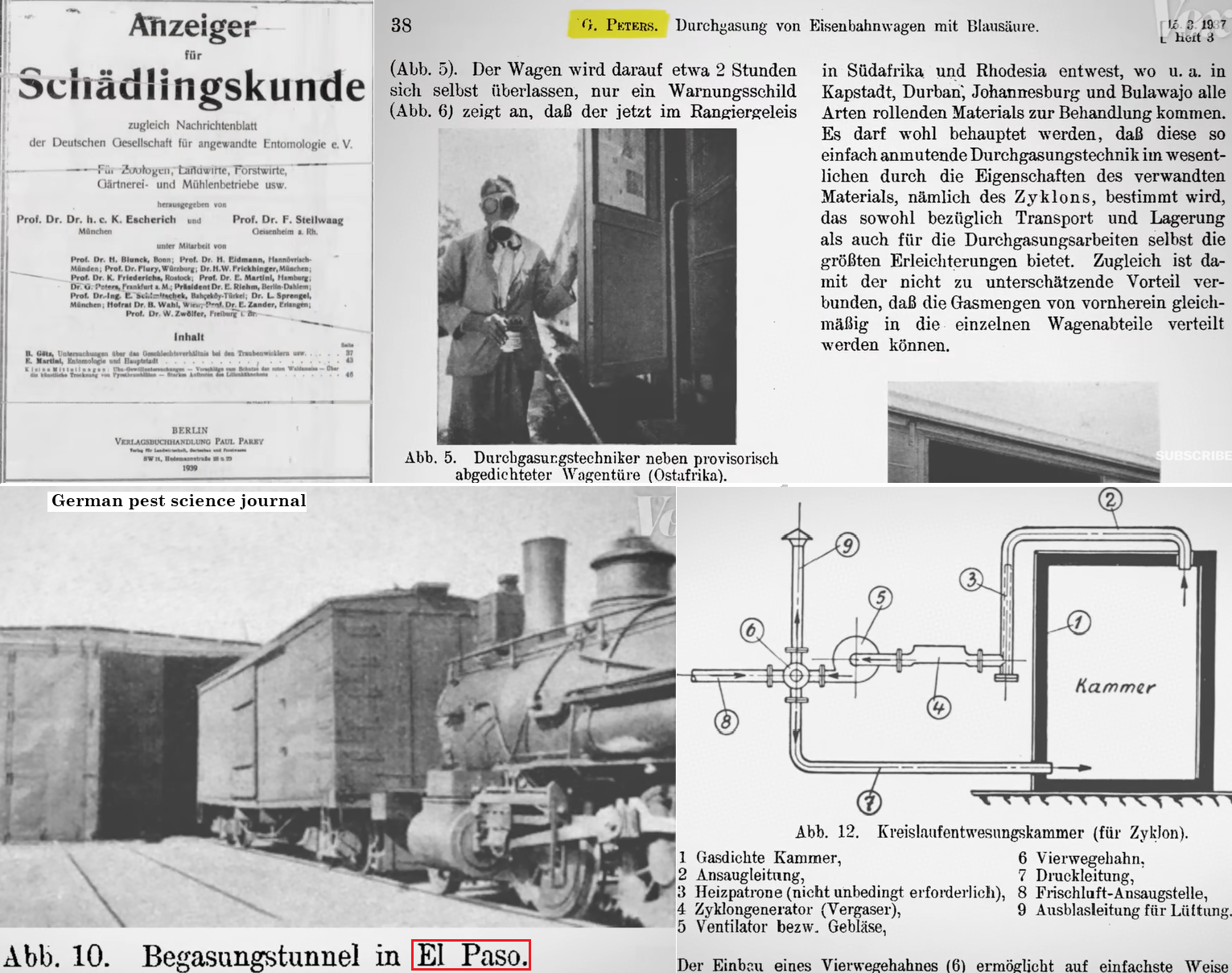
The appendices to the article discuss the railroad-disinfecting plant and transportation disinfection, with some photos and schematics that might be useful to add here.
Post Reply