Fred Ziffel wrote: ↑Sun Jan 25, 2026 9:48 am
I do not have much more than you on this subject, The one you see that encloses B42 has a gate in back of the photo and that jives with the drawing. People that were first entering the camp conceivably entered through this gate.
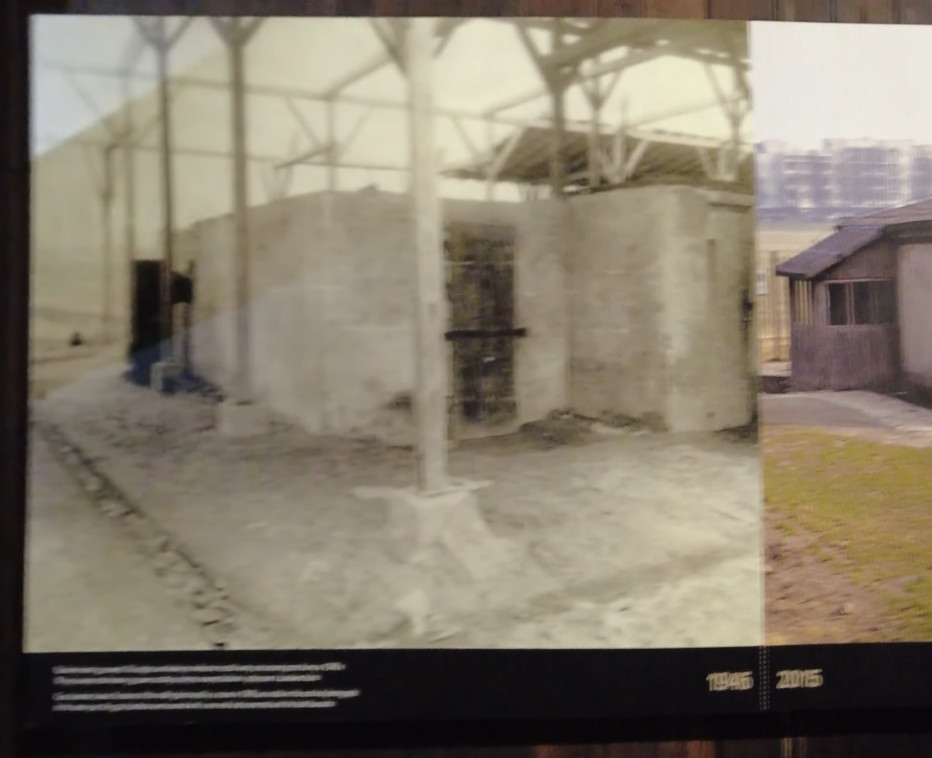
2nd photo (greenish) shows fence with gate towards the front that runs between B1 and B42. completely disregard the red arrows. that has nothing to do with subject at hand
for all that may not know "X" on the fence is a gate
But I will leave you with a few photos and a drawing of the seeable fence arrangements
Ok. Given that the Soviet drawing seems to indicate the line of the barbed wire fence, plus gates, I will assume it is correct and the description in the report is mistaken or mistranslated. Thanks.
My goal is to figure out the flow of the prisoners. I intend to map this out later, but for now consider my text description and this photo:
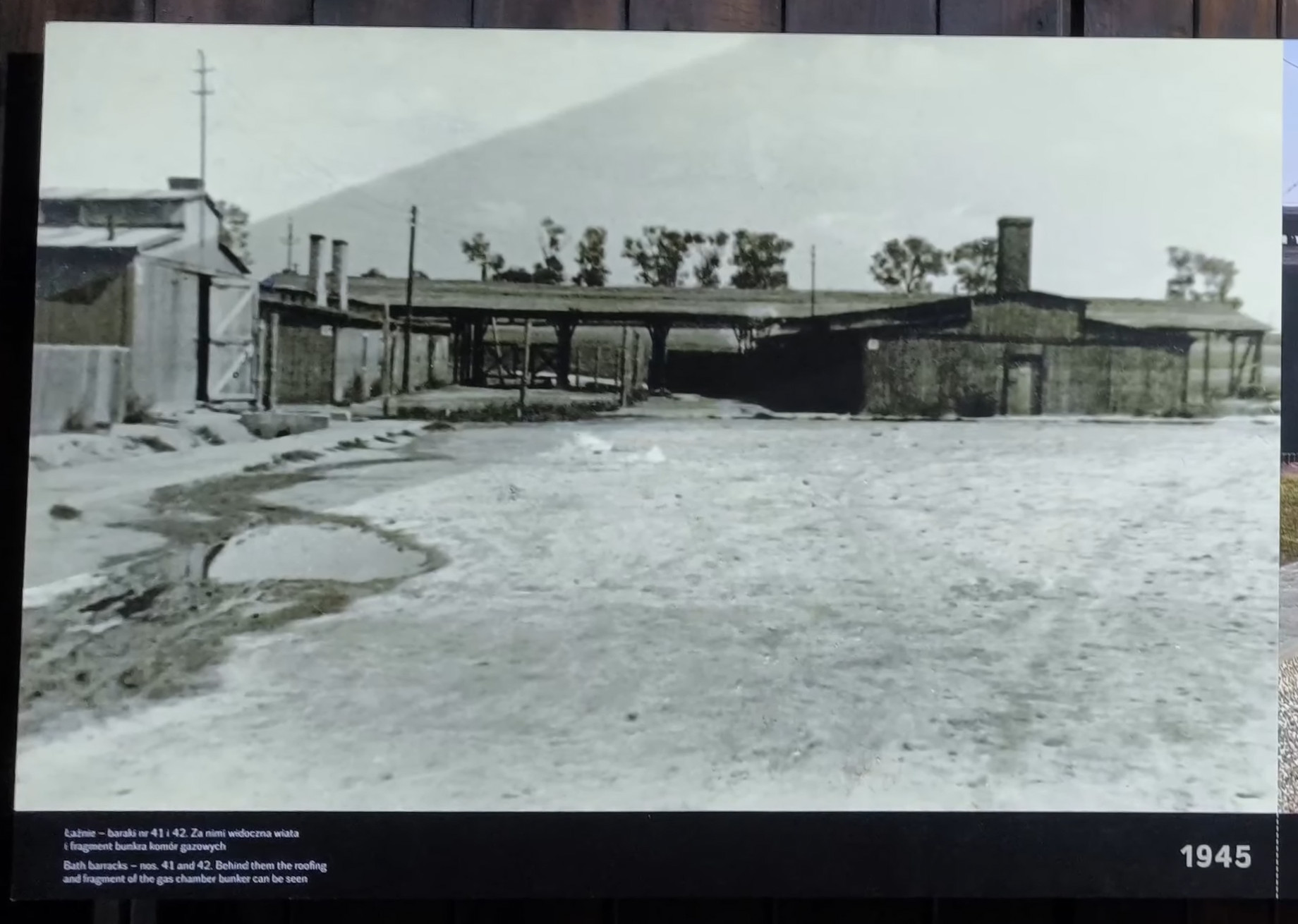
- photo of front of B42 and B41, 1945.jpg (271.83 KiB) Viewed 13213 times
If I am seeing this photo correctly, it shows a barbed wire fence running from the corner of B43 circling around B42 and ending at the southern gate of the canopy roof. The gate opens into this fenced path. Not pictured, we also know from the museum that there is a fenced enclosure to the west (left) of B42 where selections were performed, referred to as the "Rosengarten selection square". Presumably this path leads there.
Now let's consider how this is supposed to have worked. Prisoners entered B41 from the south and in the first room they undressed (if not already naked) and were shaved here, then continued north to the shower. Then what? Those to be gassed were to continue north through to the gas chambers. However, those selected to live would
also march north, getting fresh clothing in what the museum calls "the dressing room". They must then have exited by the north door, which would actually put them
inside the barbed wire fence surrounding the gas chamber bunker. The only sensible path from here would be to exit the fence through one of the two vehicle gates, but this poses a novel problem. The north gate takes them outside and away from the camp. A backwards path of travel. The south gate takes them into the B42 enclosure, which leads back to the "Rosengarten selection square". Again, a backwards path of travel.
I consider this pretty strong evidence that the path of travel has been reversed from its reality.
However there are still some lingering questions. Most importantly, from where did prisoners enter the Rosengarten square? I'm struggling to chart a complete path for the prisoners that does not have unclean prisoners walking through an area deemed clean or vice versa. I assume the clean/unclean distinction was maintained across the facility. But maybe a different photo or something can clarify the path.
Admittedly, your greenish photo contradicts my whole thesis. It shows an entirely different fence arrangement. Determining the date of this photo could decide whether this matters or not. In the video you got it from, it's mixed in with photos from different time periods and which are missing the fence.
Separate from all this, it is very unclear how selections took place at Majdanek. According to the first few museum signs in B41, the prisoners were marched naked from an Effektenbaracke to B41, but then a later sign says that they actually came clothed from the Rosengarten square to B41. A contradiction. Another contradiction is whether selection took place in the shower, as a sign in B42 claims, or in the Rosengarten square. The story is mercurial which makes it difficult to disprove.